Weather Shifts in Northern Leagues Reshaping Totals Markets Through Ground Conditions and Travel Strains

Weather patterns across northern European football leagues continue to influence totals markets in measurable ways as spring transitions into early summer each year, and May 2026 brings renewed attention to how shifting conditions alter pitch surfaces and team logistics. Observers note that leagues such as the Norwegian Eliteserien and Swedish Allsvenskan experience rapid changes in temperature and precipitation that directly affect grass quality, drainage, and ball movement, which in turn shapes the number of goals recorded in fixtures. Data from regional meteorological services shows increased rainfall variability during this period, leading grounds staff to adjust preparations in ways that slow play or create uneven bounces compared to drier months.
Ground Conditions and Their Direct Influence on Scoring
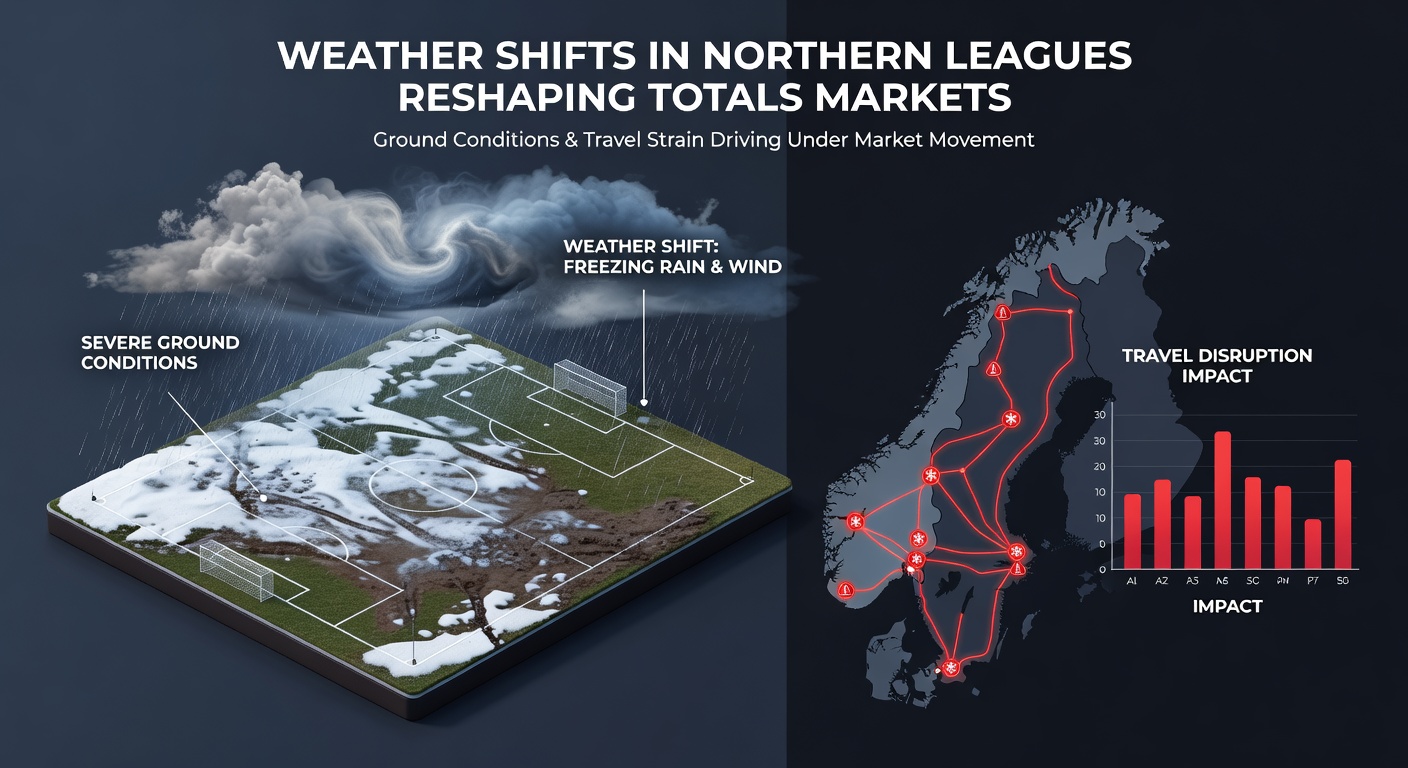
Heavy precipitation followed by cooler nights often leaves pitches softer in May, and teams in northern divisions adapt tactics accordingly while analysts track how these surfaces reduce high-speed transitions that typically produce more open play. Researchers tracking match statistics across multiple seasons have documented fewer shots on target and lower average goal tallies when water retention increases friction and limits clean striking opportunities, which feeds into under totals lines holding more frequently in affected venues. What's interesting is how groundskeepers in cities like Trondheim and Gothenburg apply specific aeration techniques weeks in advance, yet sudden downpours still override those efforts and create patchy areas that favor defensive setups over attacking fluidity.
Studies compiled by sports performance institutes reveal that matches played on saturated fields record an average drop of 0.4 goals per game when compared to equivalent fixtures on firm surfaces, prompting betting platforms to adjust their totals thresholds accordingly. Those who monitor live pitch reports note that wind combined with rain adds another layer, pushing balls wide of intended targets and increasing turnovers that stall build-up phases. This pattern repeats across northern schedules because fixture lists place several high-profile encounters in coastal stadiums where microclimates amplify moisture levels during late spring.
Travel Strains Amplifying Team Performance Variations
Longer journeys between northern venues compound the effects of changeable weather, especially when airlines and rail services face delays from fog or storms that disrupt recovery time for squads already dealing with compact calendars. Figures from transport coordination bodies indicate that away teams traveling more than 400 kilometers in May encounter elevated fatigue markers, which correlate with reduced pressing intensity and fewer successful crosses into the box. Observers tracking these patterns across Eliteserien and neighboring competitions find that such strains often suppress total goal outputs, particularly in the opening half when players require additional time to adjust to new surfaces after disrupted arrivals.
Coaches in these regions schedule extra rest periods when forecasts predict adverse conditions, yet last-minute adjustments still leave some players less prepared for the physical demands of slippery pitches. According to reports published by the European Environment Agency, rising instances of extreme precipitation events in Scandinavia during transitional months place additional pressure on scheduling committees that must balance competitive integrity with player welfare, and this dynamic indirectly influences how totals markets price upcoming fixtures. Teams returning from distant away games show measurable declines in set-piece conversion rates when travel coincides with cold fronts, creating pockets of value for those following detailed logistical data.
Market Adjustments and Statistical Patterns Emerging in 2026
Betting exchanges and oddsmakers have begun incorporating real-time weather feeds more prominently into their models for northern league totals, and this integration has led to sharper movements on over-under lines when forecasts shift within 48 hours of kickoff. Historical datasets compiled by performance analytics firms demonstrate that games played under mixed May conditions in these leagues produce under 2.5 goals outcomes at a rate approximately 7 percent higher than the seasonal average, with the effect most pronounced in matches involving teams from higher latitudes. Analysts who review these trends emphasize that travel fatigue interacts with ground softness to limit high-pressing styles, which traditionally drive elevated scoring volumes.
One study released by a university sports science department examined five years of northern league results and identified clear correlations between cumulative rainfall in the preceding week and reduced goal expectancy, prompting several operators to refine their pre-match totals algorithms. What's notable is how these adjustments appear consistently across both domestic cups and league play, where rescheduled fixtures due to earlier weather disruptions create additional variables for modelers to account for. Teams that excel at adapting to heavy conditions sometimes buck the trend, yet aggregate data across full rounds continues to support cautious approaches to over bets during periods of instability.
Broader Implications for League Scheduling and Data Integration
League organizers in northern regions have increased collaboration with meteorological agencies to anticipate problematic windows, and this proactive stance helps mitigate some disruptions while still leaving room for unexpected impacts on totals. Reports from international football governing bodies highlight how improved drainage investments in newer stadiums partially offset rainfall effects, though older venues continue to exhibit stronger correlations between precipitation and lower scoring outputs. Those following these developments observe that integrated tracking systems now combine satellite imagery with player tracking data to forecast how specific conditions might tilt individual matches toward defensive outcomes.
Market liquidity for northern league totals has grown as participants recognize the repeatable nature of these weather-driven patterns, and operators respond by publishing more granular pitch reports alongside standard previews. The interplay between ground conditions and travel logistics creates layered effects that reward detailed analysis over broad assumptions, with May 2026 serving as another test case for how variable spring weather continues to shape outcomes across multiple competitions.
Conclusion
Shifts in northern league weather patterns maintain a measurable influence on totals markets through their effects on pitch playability and team travel demands, with data from multiple seasons underscoring consistent statistical relationships. Observers monitoring these factors note ongoing refinements in both preparation methods and analytical models that account for the unique challenges of spring schedules. As leagues progress through May and into summer, the documented patterns provide a framework for understanding how environmental variables interact with competitive elements to determine final scorelines.