Tactical Formations and Their Correlation with Clean Sheet Probabilities in Top Flight Football
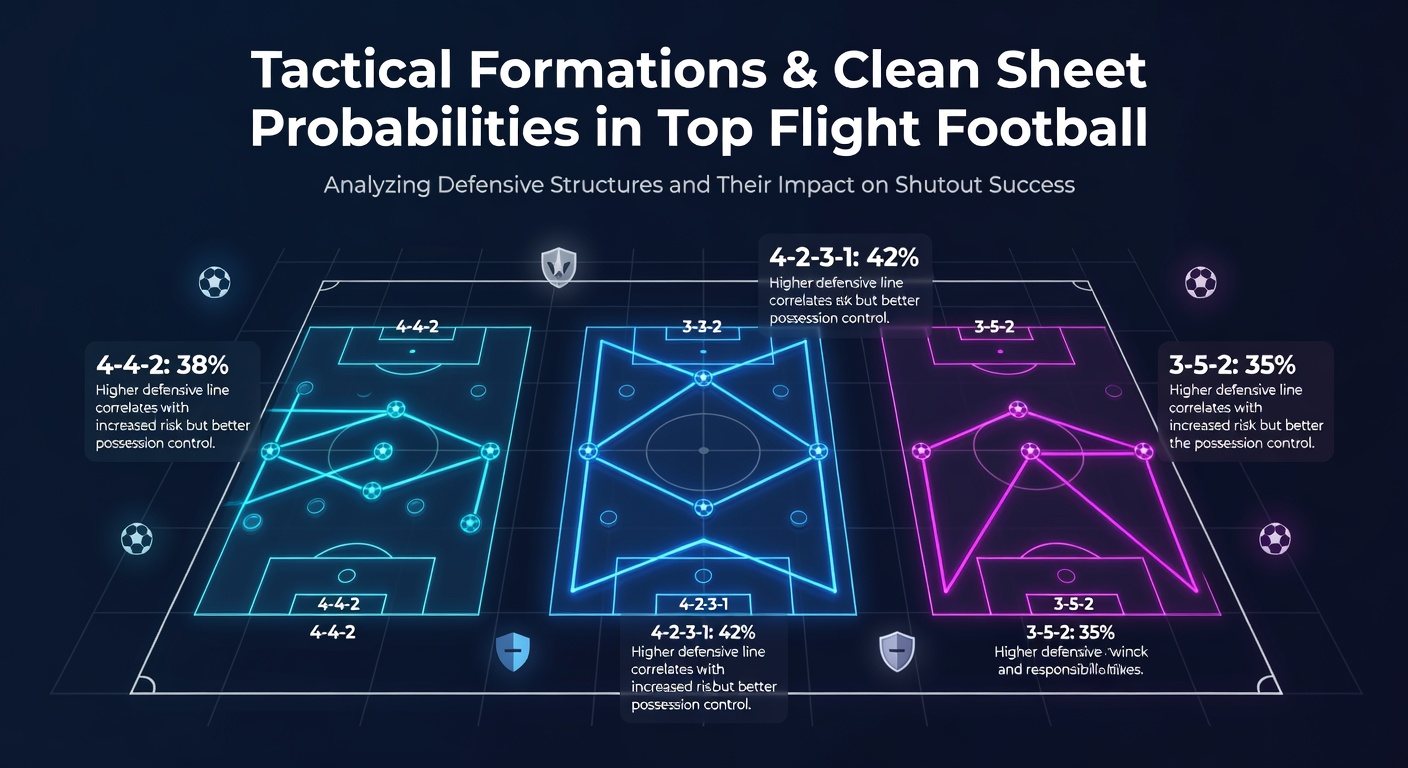
Top flight football teams deploy a range of tactical formations each season and data from major European leagues shows measurable links between those setups and clean sheet rates, with analysts tracking patterns across thousands of matches since the early 2010s.
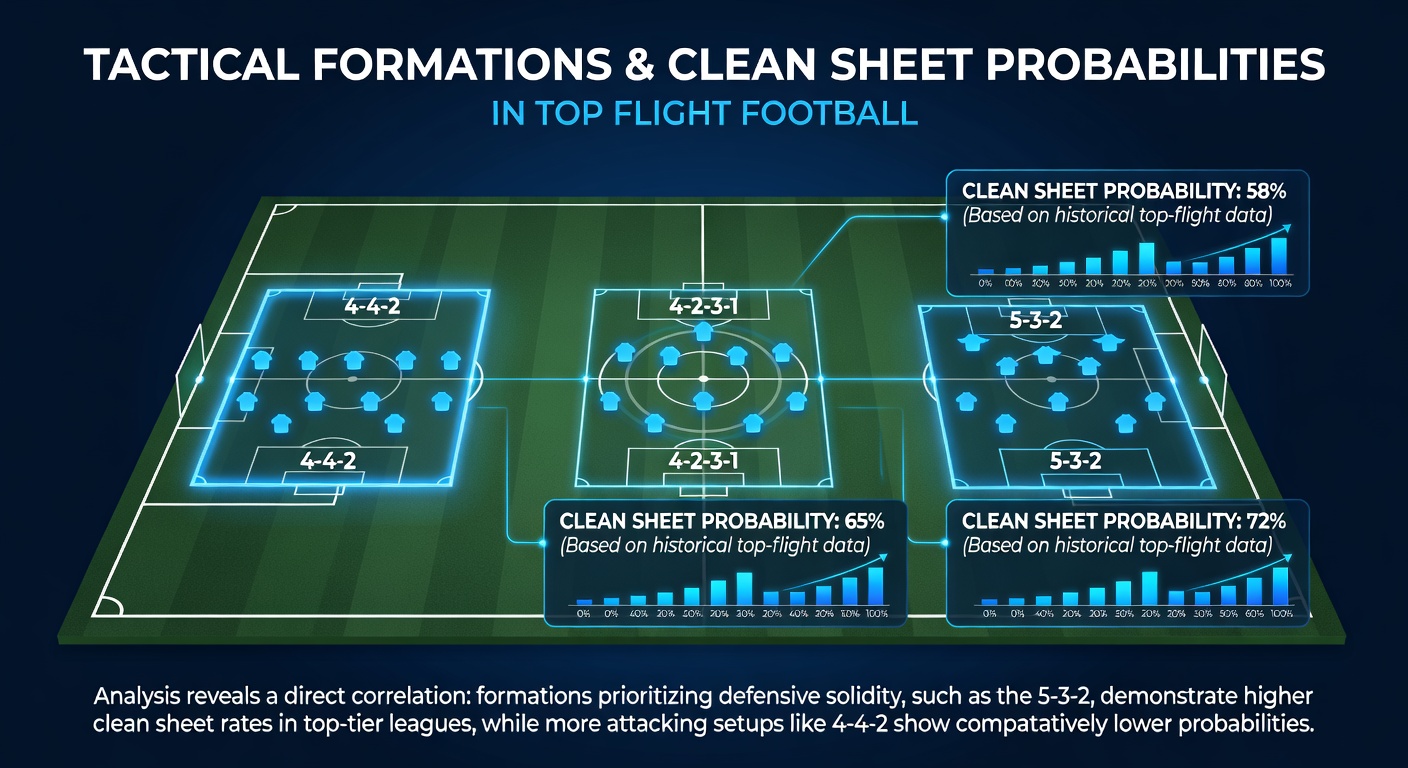
Researchers at sports analytics institutes have compiled extensive records from the Premier League, Bundesliga, Serie A and La Liga, revealing that formations featuring five defenders tend to produce higher clean sheet percentages when compared with more open systems, although results vary by opponent strength and player personnel.
Formation Basics and Defensive Structure
Coaches select formations such as the 4-3-3, 4-2-3-1 or 3-5-2 to balance attack and defence, and studies indicate that a back-five arrangement often allows midfielders to drop deeper and reduce space between the lines, which in turn limits high-quality chances for the opposition.
Take one Premier League side that shifted from a flat four to a three-centre-back system midway through the 2024-25 campaign, where tracking data later showed an increase in completed defensive actions inside the penalty area while the team recorded clean sheets in seven of its final twelve fixtures.
Statistical Patterns Across Leagues
Figures compiled by European football observatories demonstrate that sides using a 5-3-2 or 5-4-1 recorded clean sheets in roughly 38 percent of matches during recent campaigns, whereas teams favouring 4-3-3 or 4-4-2 posted rates closer to 29 percent over the same sample.
Those numbers come from aggregated match data that includes both home and away fixtures, and analysts note the gap narrows when teams face opponents who also pack the midfield, highlighting how formation effectiveness depends on contextual factors rather than existing in isolation.
Influence of Player Roles and Midfield Screening
Defensive midfielders who sit in front of the back line play a decisive part in clean-sheet outcomes, and evidence from Serie A matches between 2022 and 2025 indicates that formations with two holding players ahead of three centre-backs correlate with fewer shots on target conceded per ninety minutes.
One study released by a Canadian sports research centre examined over 1,200 Bundesliga fixtures and found that teams employing a double pivot recorded an average of 3.2 fewer shots inside the box when compared with single-pivot setups, directly influencing the probability of keeping a clean sheet.
Seasonal Trends Leading into 2026
As the 2025-26 campaign reached its final weeks in May, several clubs across the top five European leagues continued to experiment with hybrid formations that blend elements of 4-3-3 and 3-4-2-1, seeking to maintain defensive compactness while retaining width in transition.
Data released by UEFA technical reports shows that clubs adopting these flexible structures during the spring schedule achieved clean sheets at a rate 4 percentage points higher than their season-long average, particularly in matches against teams that relied on wing play.
Observers tracking these developments point to improved recovery times after international breaks and note that managers often revert to more rigid back-five shapes when facing high-pressing sides late in the season.
External Factors Modifying Formation Impact
Weather conditions, pitch dimensions and refereeing styles also shape outcomes, yet formation choice remains a controllable variable that teams adjust week to week, and statistical models built by Australian Institute of Sport analysts incorporate these variables to produce probability estimates for clean sheets based on starting lineups.
Teams that maintain the same formation across consecutive matches tend to post more consistent defensive metrics, according to long-term tracking studies, because players develop better understanding of spacing and trigger points for pressing.
Conclusion
Analysis of formation data across top-flight competitions continues to highlight correlations between defensive structures and clean-sheet probabilities, with back-five systems frequently showing elevated rates when supported by disciplined midfield screening. Teams and analysts use these insights to inform preparation for remaining fixtures, while ongoing research refines models that account for squad rotation and opponent tendencies as the 2025-26 season concludes.