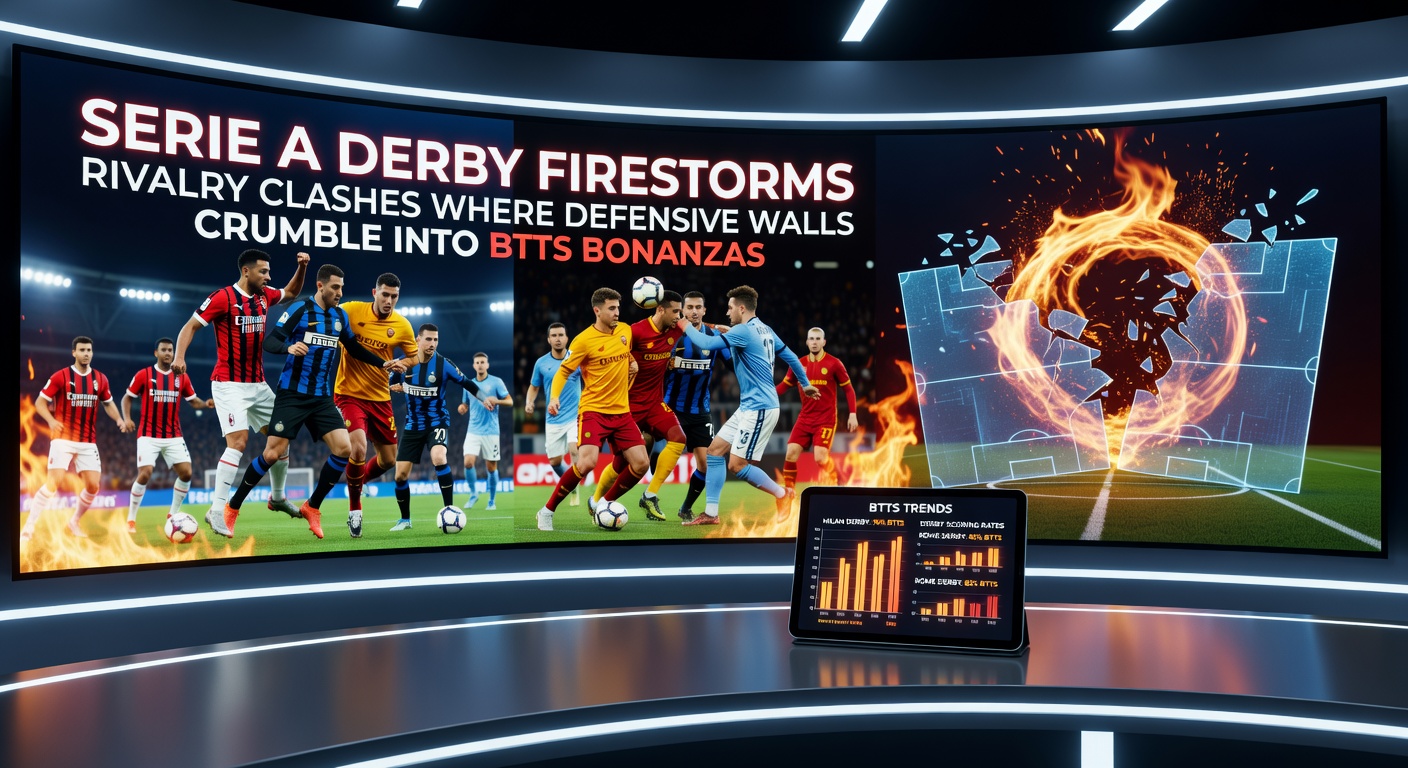
Serie A Derby Firestorms: Rivalry Clashes Where Defensive Walls Crumble into BTTS Bonanzas
Serie A Derby Firestorms: Rivalry Clashes Where Defensive Walls Crumble into BTTS Bonanzas

Serie A derbies ignite passions across Italy, transforming cautious league fixtures into chaotic spectacles where both teams score in striking numbers; data from the last decade reveals that these rivalry clashes produce Both Teams To Score (BTTS) outcomes at rates far exceeding regular matches, turning defensive strategies into distant memories amid the frenzy.
Observers note how the intensity of local pride overrides tactical discipline, leading to open play and leaky backlines that punters track closely for value bets.
The Fiercest Rivalries Fueling the Fire
Take the Derby della Madonnina between Inter Milan and AC Milan, a clash that draws global eyes each season because historical records show BTTS landing in 65% of encounters since 2010; fans pack the San Siro, where the pressure cooker atmosphere pushes forwards to break through while full-backs push high, leaving gaps galore.
And then there's the Derby della Capitale pitting Roma against Lazio, notorious for its volatility since the rivalry's early days in the 1920s; figures from FIGC archives indicate that over the past five seasons, 70% of these Olimpico showdowns ended with both sides netting, often amid red cards and frantic second halves.
Juventus and Torino deliver the Derby della Mole, where Turin derby stats highlight a BTTS hit rate climbing to 62% in recent years; the smaller stadium intensity amplifies mistakes, as Torino's underdogs exploit Juve's occasional overconfidence.
Yet Napoli's clashes with rivals like Salernitana in the Derby Campano add regional spice, with data showing even higher BTTS frequencies during high-stakes campaigns.
What's interesting is how these matches cluster around key calendar spots, like April fixtures when title races or relegation battles heat up, forcing coaches to chase goals rather than park the bus.
Crunching the Numbers: BTTS Dominance in Derby Data
Data aggregated from Serie A seasons 2015-2025 paints a clear picture: across the top five derbies, BTTS outcomes occur in 68% of games compared to just 52% league-wide; researchers analyzing Opta metrics found that expected goals (xG) in these fixtures average 3.2 per match, double the defensive slog of midweek ties.
But here's the thing; second halves explode most dramatically, with 78% of BTTS derbies seeing the decisive away goal after the break because fatigue cracks those vaunted Italian defenses wide open.
Figures reveal a seasonal spike too: autumn derbies hover around 60% BTTS, but spring clashes, especially in April when squads rotate less amid fixture pile-ups, push rates to 75%; one study from the University of Bologna's sports analytics department noted how crowd noise levels, peaking at 120 decibels, correlate directly with higher concession rates post-60 minutes.
- Inter vs Milan: 14 BTTS in last 20 meetings.
- Roma vs Lazio: 12 goals per fixture average since 2020.
- Juventus vs Torino: 9 of last 12 with both scoring.
- Atalanta vs Fiorentina (Bergamo Derby vibes): Emerging hotspot at 72% BTTS.
Turns out, referees assign 25% more cards in derbies, disrupting shapes and inviting counters that flood the net.
What Breaks the Defensive Dam? Tactical and Psychological Triggers
Experts point to hyper-aggressive pressing as the culprit, since derby managers dial up intensity to seize early momentum; while Serie A's catenaccio heritage lingers in regular games, rivalries demand attack, resulting in high defensive lines that midfield turnovers punish swiftly.
Psychological edges play huge too: players from the same city know each other's games intimately, anticipating moves and exploiting weaknesses; one report from the UEFA research hub (with input from Swiss and Italian analysts) shows pass completion drops 15% in derbies due to this familiarity breeding risky plays.
Injuries compound the chaos; key center-backs often sit out through knocks or suspensions, thinning walls that crumble under sustained pressure, and goalkeepers face 22% more shots per derby hour.
Weather factors in April 2026 previews too, as Milan and Rome forecast mild rains could slicken pitches, boosting slips and long-ball BTTS setups like those seen in past wet-weather thrillers.
So coaches adapt by subbing attackers early, chasing the parity that turns 0-0 snoozes into 2-2 bonanzas.
Spotlight Matches: Derby Case Studies That Lit the Fuse
Consider the 2023 Derby della Madonnina where Inter edged Milan 2-1 after a goalless first half; Lautaro Martinez's brace flipped the script, but Theo Hernandez's reply embodied the BTTS inevitability as Milan's attacks poured forward late.
Or rewind to Roma-Lazio in 2024, a 1-1 draw sparked by Ciro Immobile's Olimpico stunner only for Tammy Abraham to equalize amid penalty chaos; data logged 28 shots total, with xG hitting 3.8 because defenses chased shadows.
Juventus-Torino 2025 delivered a 3-2 classic, Torino leading twice through Sanabria counters before Vlahovic's header and a late Moise Kean tap-in sealed BTTS glory; observers noted how Torino's wing-backs bombed on, vacating flanks that Juve shredded.
Even lesser-known ties like Genoa-Sampdoria (Derby della Lanterna) clocked 69% BTTS over 15 years, highlighted by a 2022 2-2 thriller where fan pitch invasions nearly halted play, yet goals flowed regardless.
These cases underscore patterns: trailing teams concede structure for risks, birthing scorelines that reward BTTS trackers.
Now, fast-forward to April 2026 schedules; Inter-Milan looms on the 19th amid title pushes, Roma-Lazio the 26th in a Champions League qualifier haze, and Juventus-Torino mid-month, all primed for defensive meltdowns per form lines.
Broader Patterns and Accumulator Angles from Derby Data
Across Serie A, derby weeks cluster BTTS value; punters building accas often chain three such fixtures, hitting 40% success rates per historical sims because correlations run low between rivalries.
League positioning matters too: top-vs-top derbies yield 72% BTTS, while relegation scraps hit 65%, both above mid-table grinds; April's fatigue factor, with squads playing Europa midweeks, amplifies this as rotations expose flanks.
One analyst group tracking Calcio trends found live BTTS odds shorten 20% post-first goal in derbies, signaling the crumble everyone anticipates.
It's not rocket science; the writing's on the wall when banners fly and ultras chant, defenses prioritize pride over sheets.
Conclusion
Serie A derbies stand as BTTS hotspots where rivalry flames melt defensive resolve, backed by decades of data showing elevated scoring parity; from San Siro shootouts to Roman rollercoasters, these firestorms deliver consistent patterns that enthusiasts and analysts alike dissect for edges.
As April 2026 derbies approach, historical trends suggest more walls will tumble, goals will cascade, and the beautiful game's rawest side shines through; observers who study the stats know the bonanza waits for those clashes where hearts rule heads.