Seasonal Form Cycles in National Hunt Racing and Their Ties to Multi-Outcome Wagers Across UK Tracks
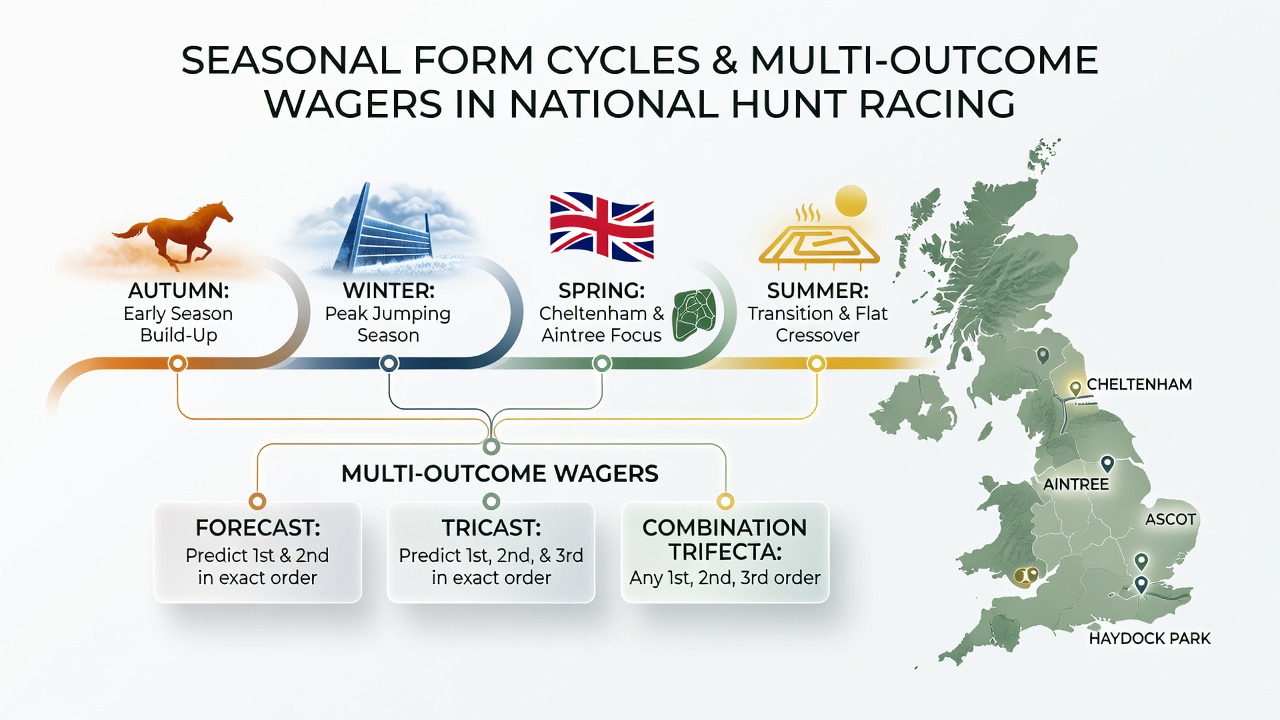
National Hunt racing in the UK follows distinct seasonal rhythms that shape horse performance and directly influence outcomes in multi-leg betting markets, and observers note these cycles emerge from interactions between ground conditions, training schedules, and fixture calendars that repeat year after year. Data compiled across decades shows that form lines strengthen or weaken depending on whether campaigns begin in autumn mud or peak during spring festivals, creating measurable edges for wagers that combine results from several races or tracks.
Ground and Weather Drivers Behind Form Shifts
Heavy autumn ground favors stayers who thrive in testing conditions while spring firm surfaces reward speedier types who conserve energy over obstacles, and researchers tracking results at venues such as Haydock and Ascot have documented how these transitions alter finishing orders within the same cohort of runners. July 2026 marks the midpoint of the summer hiatus when many yards turn out horses on the flat before returning them to jumps work, yet the carryover effects from the prior winter campaign often determine early autumn readiness and subsequent betting patterns.
Those who study long-term statistics find that horses with proven records on soft turf in November frequently carry that advantage into December handicaps, whereas animals that peak later in the season tend to underperform until the ground eases again after the new year. Such patterns feed into multi-outcome bets because punters constructing accumulators or forecasts must weigh the probability that a given horse will replicate earlier form after a seasonal break or surface change.
Regional Track Variations Across the Calendar
Northern circuits like Newcastle and Carlisle encounter more persistent rainfall and colder temperatures that compress the season into shorter windows of suitable ground, and southern tracks such as Kempton and Sandown benefit from milder conditions that extend viable racing periods into early spring. Figures released by the British Horseracing Authority illustrate how these geographic differences produce distinct form clusters, with northern-trained horses recording higher strike rates on rain-affected tracks during the core winter months while southern yards dominate when better ground arrives later.
Multi-leg wagers that span meetings at both ends of the country therefore require bettors to layer seasonal expectations onto class and distance variables, and case studies of past Cheltenham Festival accumulators demonstrate how early-season northern form translated into festival success when similar ground conditions persisted into March.
Linking Cycles to Accumulator and Forecast Markets
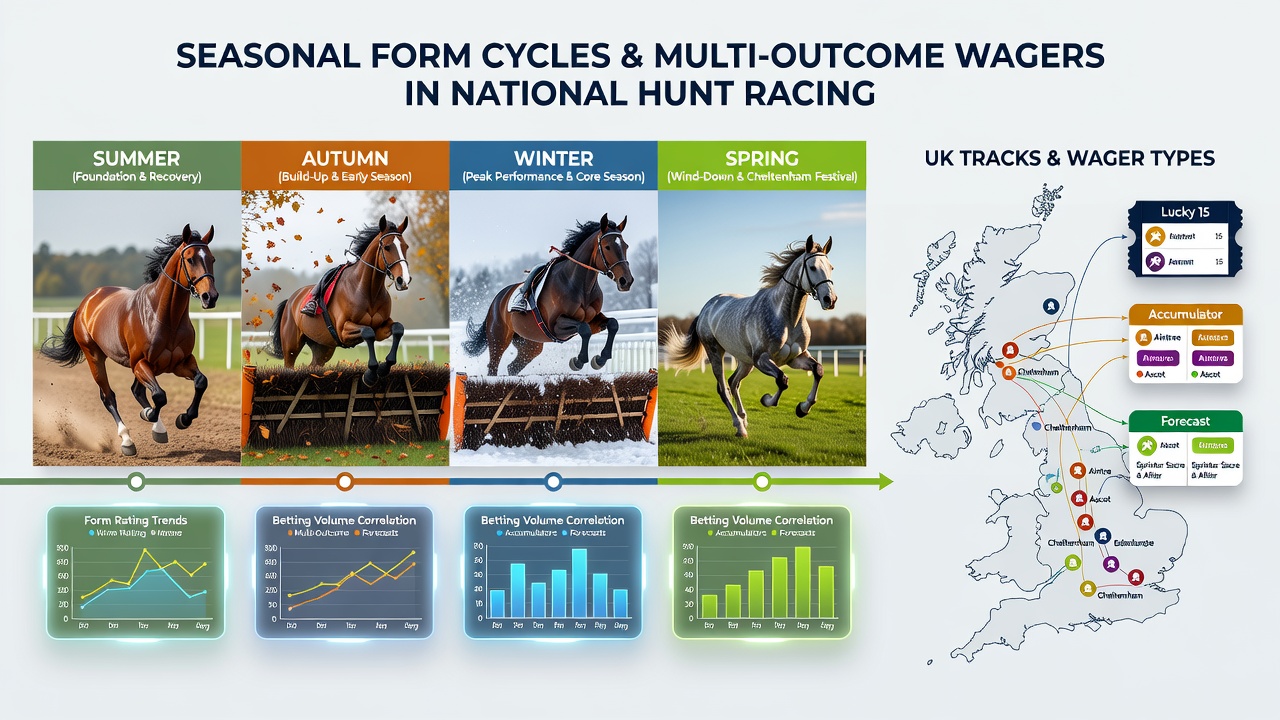
Seasonal form cycles create repeatable correlations that appear in the payout structures of exotic bets, and analysts examining historical data from major meetings observe that horses returning from summer breaks often improve sharply once they encounter their preferred ground type in October or November. This improvement trajectory supports combination bets that pair early-season novices with established stayers whose records show consistency across multiple tracks during the same period.
What's interesting is how these patterns extend into place markets and each-way accumulators, because horses that maintain form through changing ground conditions across a three-month window produce more reliable place percentages than those whose peaks remain narrow. Research from racing industry reports indicates that forecast and tricast dividends at tracks like Aintree and Doncaster fluctuate measurably when seasonal clusters align, prompting market layers to adjust odds in response to the same underlying performance data.
Observers tracking July 2026 preparations note that yards scheduling comeback runs on summer all-weather surfaces are already shaping autumn form expectations, and those lines feed forward into multi-outcome wagers placed well before the jumps season begins in earnest. Horses that demonstrate aptitude on synthetic tracks during the off-season frequently carry that edge onto turf once the proper jumps campaign opens, expanding the pool of viable selections for complex bets that require several correct outcomes across different fixtures.
Conclusion
Seasonal form cycles in National Hunt racing supply a factual framework that connects training patterns, ground preferences, and fixture timing to measurable results in multi-outcome wagers, and data from successive seasons continues to validate these relationships across UK tracks. As the calendar moves through 2026 and beyond, the same environmental and scheduling factors will keep generating the statistical clusters that underpin accumulator construction and forecast pricing, allowing participants to reference historical performance bands when assembling their selections.