Pitch Wear Patterns Reshaping Cricket Test Totals During Multi-Day Encounters

Cricket pitches undergo systematic changes across five-day Test matches as repeated ball impacts, foot traffic, and environmental factors alter surface conditions, and these transformations directly influence run-scoring patterns. Early in matches the surface remains firm and true, allowing batsmen to play with greater predictability, while later days introduce variable bounce and increased spin assistance that reshape both batting strategies and bowling outcomes. Data from international fixtures shows that first-innings totals often exceed 350 runs on fresh pitches, yet fourth-innings targets frequently fall below 250 when wear accelerates.
Mechanics of Surface Deterioration
Soil composition, grass cover, and moisture retention determine how quickly a pitch breaks down, and groundsmen adjust preparation techniques to balance these elements according to local climate conditions. Clay-heavy soils in subcontinental venues crack more rapidly under heat, whereas grassier surfaces in cooler regions retain moisture longer and produce seam movement instead. Researchers at the University of Pretoria's Sports Science Institute have documented how clay particle displacement creates uneven footing after 60 overs, leading to unpredictable bounce that reduces boundary percentages by measurable margins.
Cracks form along the length of the pitch as moisture evaporates, and these fissures widen with each passing session, allowing spinners to extract sharp turn from the roughened areas. Fast bowlers lose effectiveness once the surface softens, since the ball no longer rebounds consistently, and teams respond by rotating attack options to exploit the changing conditions. Observers note that captains delay declarations when forecasts indicate further deterioration, because the opposition faces progressively tougher batting conditions on subsequent days.
Impact on Scoring Patterns
Run rates typically decline from day three onward as the ball begins to grip and deviate, and statistical reviews of Test cricket between 2015 and 2025 confirm that average runs per wicket drop by approximately 18 percent after 200 overs. Opening batsmen encounter fewer scoring opportunities once reverse swing develops on the worn ball, while middle-order players must contend with deliveries that bounce variably from the cracked surface. Teams batting fourth often chase revised targets that reflect these reduced scoring rates, and successful defenses increase when the pitch offers consistent assistance to spinners.
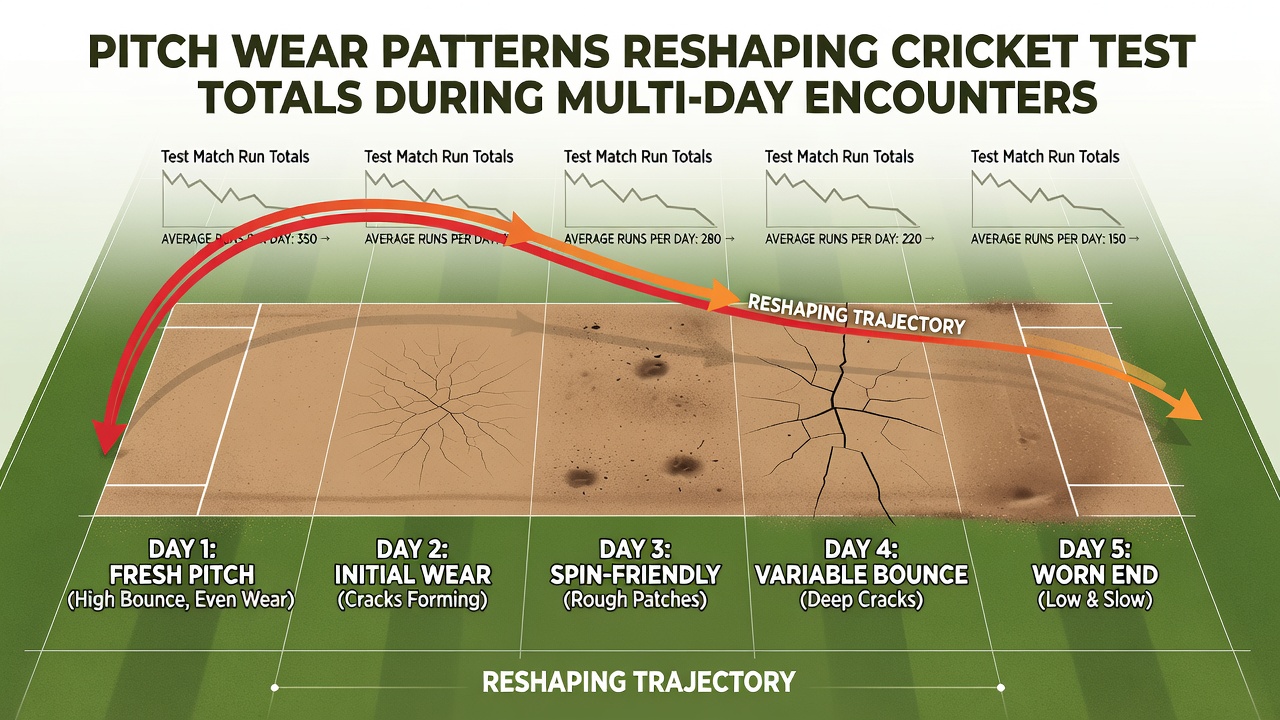
July 2026 schedules include several multi-day encounters in both hemispheres where groundsmen have prepared surfaces expected to last the distance, and early reports indicate that teams are adjusting selection to include additional spin options. Historical aggregates reveal that matches concluding on day four produce lower aggregate totals than those extending to day five, because captains declare earlier when wear accelerates collapse. Batting partnerships shorten as the surface deteriorates, and this pattern holds across venues in Australia, England, and South Africa according to aggregated match data.
Regional Variations in Wear Effects
Venues in Australia feature pitches that retain hardness longer due to different soil bases, resulting in higher fourth-innings totals compared with Indian or Sri Lankan grounds where spin dominates late in matches. Cricket Australia maintains pitch monitoring protocols that track deterioration rates, and these records show consistent differences between coastal and inland stadiums. In contrast, subcontinental pitches exhibit quicker transitions to spin-friendly states, and teams there prioritize wrist spinners who can exploit footmarks created outside the batting crease.
European venues experience slower wear because cooler temperatures preserve moisture, and this extends the period during which seam bowlers remain effective. Data compiled across ECB competitions demonstrates that matches played in July record higher draw percentages when pitches resist rapid breakdown, allowing teams to build substantial first-innings totals without facing extreme conditions later. Selection strategies therefore incorporate all-rounders who contribute with both bat and ball across varying surface states.
Strategic Adjustments by Teams
Coaches review pitch reports daily and modify field placements as cracks widen, positioning slip cordons deeper to catch edges produced by turning deliveries. Bowlers target the rough areas created by footmarks, and batsmen adopt more defensive approaches once the ball begins to turn sharply. These tactical shifts produce measurable changes in shot selection, with sweep and reverse-sweep percentages rising in later innings according to ball-tracking technology used in broadcast analysis.
Teams that win tosses increasingly elect to bowl first on surfaces expected to deteriorate, because the opposition then faces the most challenging conditions during the final innings. This approach has produced higher win rates in recent seasons at venues where historical data shows pronounced wear effects, and analysts continue to track these trends through centralized match databases.
Conclusion
Pitch wear patterns continue to exert measurable influence over Test match scoring dynamics, and governing bodies maintain ongoing research into preparation methods that balance durability with competitive balance. Regional differences in soil and climate produce distinct deterioration timelines, while teams adapt selections and tactics to exploit the resulting conditions. Continued monitoring through standardized reporting systems provides the data necessary for understanding how these surface changes reshape aggregate totals across multi-day encounters.