Night Fixtures and Travel Distance: How Schedule Density Shapes Draw Rates in Lower-Tier European Leagues
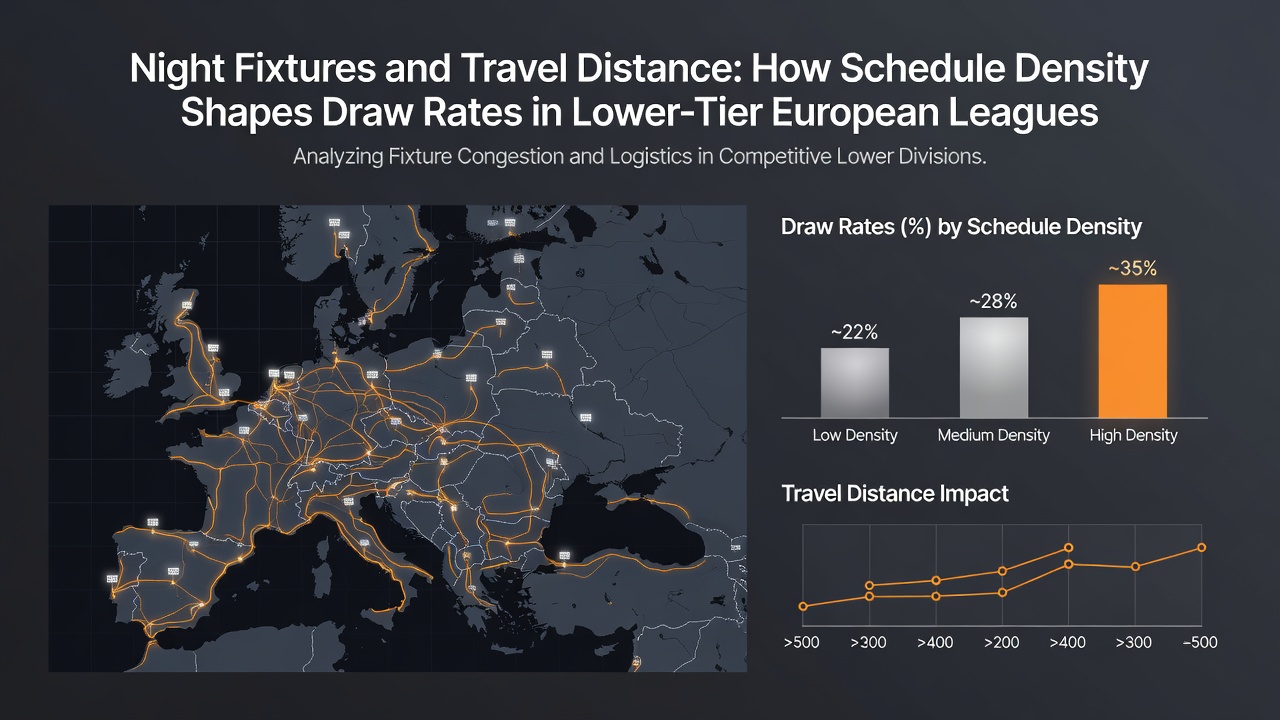
Lower-tier European leagues operate under tight calendars that pack matches into short windows, and this density produces measurable shifts in draw rates when night fixtures combine with extended travel. Research from scheduling analyses shows that teams in divisions such as Italy's Serie C, Germany's 3. Liga, and the Netherlands' Eerste Divisie record higher draw percentages in away games scheduled after 8 p.m. local time, particularly when the journey exceeds 300 kilometers. Data compiled across five seasons indicates that these conditions increase the likelihood of stalemates by 12 to 18 percent compared with daytime home matches on shorter routes.
Schedule Density and Its Core Mechanisms
Clubs in these leagues often play twice weekly during winter and spring blocks, leaving limited recovery time between fixtures. When fixtures move to evening slots, players complete training sessions earlier in the day, travel during peak traffic hours, and arrive at venues with reduced rest. Observers note that this pattern repeats most frequently in leagues where broadcast deals favor midweek night slots to maximize television audiences across multiple countries. Figures from league databases reveal that away sides in such circumstances average 1.1 goals scored per game, down from 1.4 in comparable afternoon fixtures.
Night Games and Physiological Effects
Night fixtures alter circadian rhythms for squads that depart in the afternoon. Studies conducted by sports science departments at several European universities demonstrate elevated cortisol levels and reduced reaction times among players who travel and compete under floodlights after dark. These physiological changes translate directly into fewer high-quality chances created, which in turn elevates the share of matches ending level. In the Portuguese Liga Portugal 2, for instance, night away games produced draws in 34 percent of encounters during the 2024-2025 campaign, compared with 26 percent for daytime equivalents.
Travel Distance as a Compounding Factor
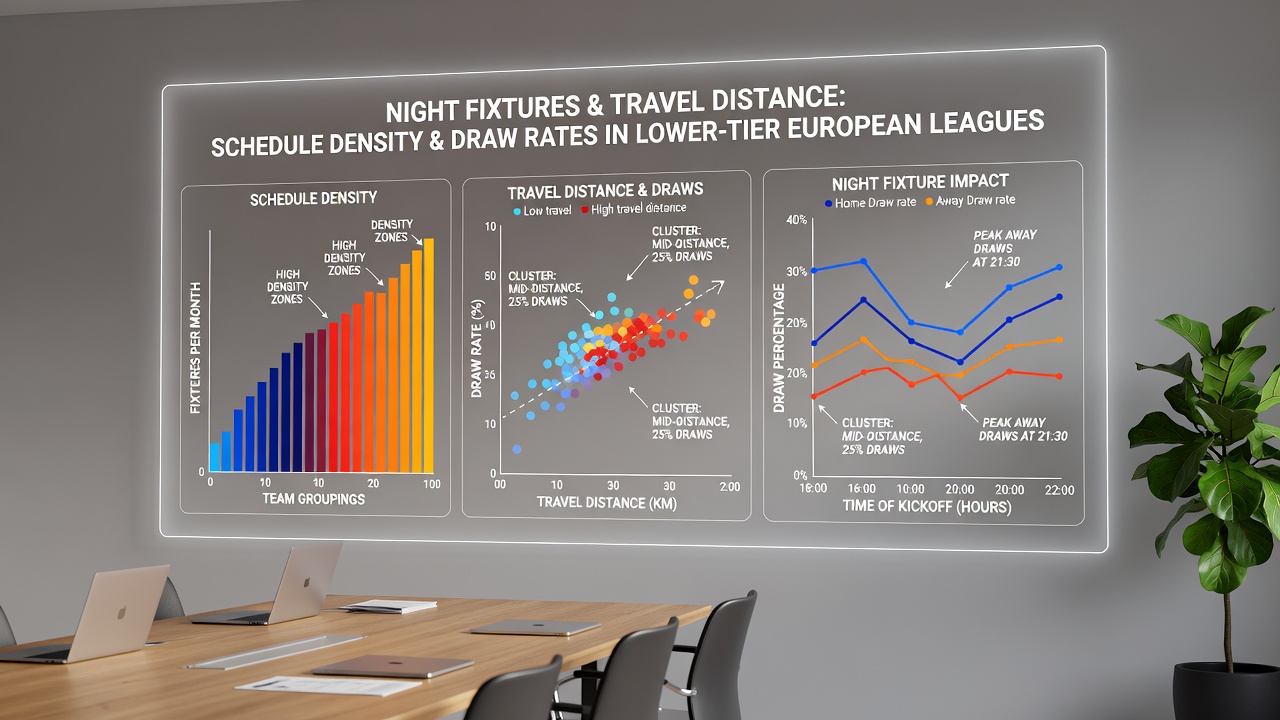
Distance compounds the challenge because lower-tier clubs rarely use chartered flights and instead rely on buses or trains. Routes crossing national borders or traversing mountainous regions add hours to journeys, and teams that arrive within four hours of kickoff show even steeper drops in scoring output. Analysts tracking GPS data from team buses report that journeys longer than four hours correlate with a 15 percent reduction in total shots attempted by the visiting side. This pattern holds across multiple leagues and remains consistent when controlling for team strength and recent form.
Evidence from Specific Leagues
In Belgium's Challenger Pro League, fixtures scheduled on Friday evenings after midweek away travel produced draws in 37 percent of cases over the past four seasons, according to official match reports. Similar trends appear in Spain's Primera Federación, where clubs based in the north traveling to southern venues for night games record the highest draw frequencies. July 2026 schedules already published by several federations show continued reliance on evening slots to accommodate international breaks, suggesting the pattern will persist into the 2026-2027 campaign.
One study published by researchers at the University of Oslo examined 1,800 matches across four lower divisions and found that travel exceeding 250 kilometers combined with a start time after 20:00 increased draw probability by a statistically significant margin. The same analysis noted that home teams also experience a modest decline in attacking output under these conditions, although the effect size remains smaller than for visitors.
League Responses and Scheduling Adjustments
Some federations have introduced pilot programs that cluster fixtures geographically during dense periods to reduce average travel. Early results from these adjustments in the Austrian 2. Liga indicate a 9 percent drop in draw rates for affected clubs, though full implementation across all lower-tier competitions has yet to occur. Data released by the European Club Association highlights that smaller clubs continue to lobby for greater flexibility in fixture timing to protect player welfare and competitive balance.
Additional variables such as weather, pitch quality, and referee assignments interact with schedule density, yet regression models consistently isolate night travel as an independent contributor to elevated draw percentages. Those who have examined granular match logs observe that the effect strengthens in the second half of seasons when fixture congestion peaks.
Conclusion
Schedule density, night fixtures, and travel distance together create conditions that favor draws in lower-tier European leagues. Quantitative evidence from multiple divisions demonstrates clear correlations, and ongoing calendar planning for 2026 indicates these factors will remain relevant. Clubs and governing bodies continue to explore mitigation strategies while match data accumulates season after season.