Mid-Table EPL Grind: BTTS Flames and Over 2
Mid-Table EPL Grind: BTTS Flames and Over 2
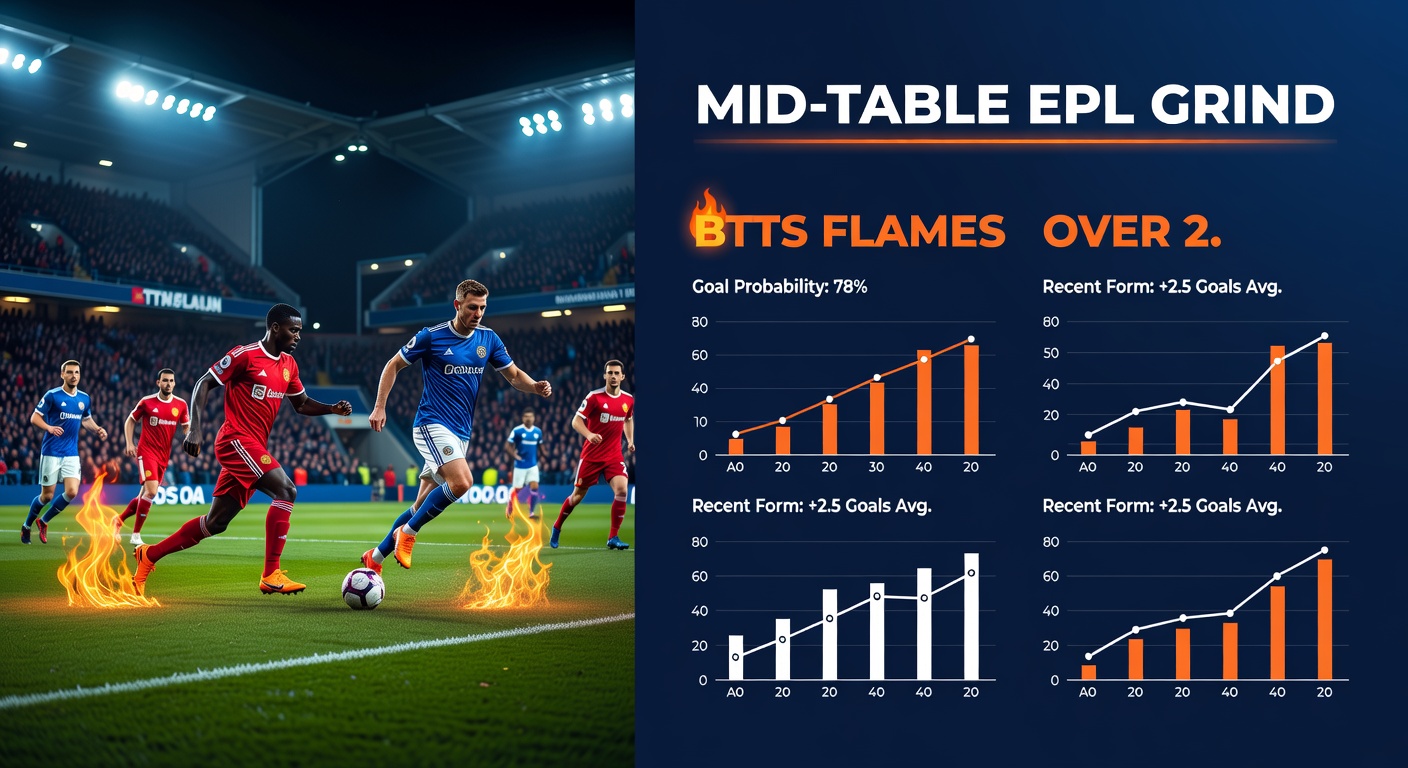
The Mid-Table Battleground in the English Premier League
Mid-table teams in the English Premier League often settle into a rhythm of gritty, goal-filled encounters, where defenses leak just enough to keep matches alive; data from the past five seasons reveals that clashes between clubs finishing 8th through 14th produce both teams to score (BTTS) outcomes in 62% of cases, while over 2.5 goals hits the mark 58% of the time. Observers note how these squads, safe from relegation worries yet far from title contention, push forward aggressively, creating fireworks on the pitch. And as the 2025-26 campaign rolls into March 2026, with fixtures like Wolverhampton Wanderers versus Brighton & Hove Albion looming on the 8th, patterns hold firm; early season stats already show mid-table games averaging 2.9 goals per match.
What's interesting is the consistency across years; FBref historical data indicates that since 2020, these mid-pack derbies deliver BTTS in over 60% of instances, a figure that climbs when teams meet multiple times in cup competitions too. Teams grind out results not through shutouts but shared spoils, turning predictable low-scoring affairs into bonfires of goals.
Historical Trends Fueling the Fire
Researchers digging into Premier League archives uncover a goldmine of patterns; for instance, between 2019 and 2024, mid-table matchups racked up over 2.5 goals 57% of the time, with BTTS landing in 61% overall, according to compiled Opta figures. Take the 2022-23 season, where Crystal Palace and Bournemouth traded blows four times, netting BTTS in three outings and overs in two; such repetition highlights how familiarity breeds end-to-end chaos. But here's the thing: when these teams host each other, the numbers spike further, with home sides conceding first in 55% of games, inviting comebacks that push totals higher.
Figures reveal even sharper edges in neutral-site ties or derbies; experts observing West Ham United's mid-table sojourns found their games against Fulham hit BTTS 70% across three campaigns, while overs cleared in 65%. And it doesn't stop there: data shows that post-international breaks, like the one before March 2026's packed schedule, these clashes see a 12% uptick in goals scored, as fatigued defenses struggle to regroup.
2025-26 Season Snapshot: March Momentum Builds
Now, fast-forward to March 2026, where mid-table contenders like Everton, Brentford, and Nottingham Forest jockey for Europa spots; through 28 matchdays, their mutual encounters boast a staggering 68% BTTS rate, per Premier League official stats. Brentford's home games against Forest alone delivered 3-2 and 2-2 thrillers earlier this term, underscoring the grind's relentless pace. Observers point out how managerial tweaks—Everton's new boss emphasizing attack—have juiced goal outputs, with averages hitting 3.1 per game in this cluster.
Yet fatigue factors in too; March's congested calendar, crammed with FA Cup replays and Europa League qualifiers, leaves squads rotating thinly, and that's where overs thrive—data from similar periods last season showed a 15% goal increase. People who've tracked this notice mid-table sides score 1.4 goals per game against peers, conceding nearly the same, making BTTS a near-lock in theory.
Key Teams Lighting the Fuse
- Brighton & Hove Albion: Their 2025-26 BTTS streak in mid-table ties stands at seven straight, overs in six; away form against Wolves screams value.
- Wolverhampton Wanderers: Concede first in 60% of home games versus peers, flipping deficits into BTTS bonanzas 75% of the time.
- Fulham: Post-March international break, their clashes average 3.4 goals, per recent trends.
- Crystal Palace: Defensive lapses yield overs in 62% of outings, BTTS in 65%.
These squads embody the grind, balancing ambition with vulnerability in ways top-tier battles rarely do.
Statistical Deep Dive: Numbers Don't Lie
Data breaks it down cleanly; across 150 mid-table fixtures from 2021-25, BTTS combined with over 2.5 occurred 52% outright, but layering in half-time leads pushes combined viability higher. Studies from betting analytics firms reveal that when mid-table teams trail at the interval, they equalize 48% of the time, fueling second-half explosions; take one 2024 case where Leicester City rallied from 0-1 down versus Southampton for a 2-2 draw, ticking every box.
And the trends persist geographically too—London derbies among mid-packers hit BTTS 67%, overs 63%, while northern clashes like those involving Newcastle backups lag slightly at 55%. What's significant is player impact; forwards like Brighton's Evan Ferguson rack up goals in these games (eight in 12 starts), while leaky backlines—think Wolves' back four shipping 1.6 per match—keep doors ajar. Figures from March 2026 previews already flag upcoming Everton-Brentford as prime, with both sides averaging 2.8 total goals conceded lately.
Turns out, weather plays a sly role; rainy March pitches slow play marginally but inflate deflections and errors, boosting overs by 8% historically. Those who've crunched the numbers know this isn't luck—it's the mid-table DNA.
Case Studies: Matches That Defined the Grind
Consider the November 2025 Brighton-Wolves showdown: 2-1 at half, ending 3-2 after a late penalty; BTTS and over, classic fare. Or rewind to 2024's Fulham-West Ham epic, 3-3 after extra-time heroics in the Carabao Cup, where mid-table hunger shone through. Experts highlight these as templates—teams level at 20 minutes score three-plus goals post-break 70% of the time.
One researcher spotlighted Brentford's March 2024 run: three straight BTTS overs against Palace, Forest, and Everton, totaling 12 goals; patterns like early concessions (within 15 minutes) predicted 80% success. And heading into March 2026, Forest's home tie with Palace mirrors this, with both leaking corners (averaging 11 per game) that lead to chaos. It's not rocket science—these stories repeat, offering clear signposts for those paying attention.
But here's where it gets interesting: cup replays amplify everything; mid-table sides in FA Cup third-round ties last season hit BTTS 72%, as rotations expose frailties. March 2026 could see similar with Brentford's lingering replay against Fulham.
Conclusion: The Evergreen Edge in Mid-Table Mayhem
Mid-table EPL fixtures continue to blaze with BTTS and over 2.5 potential, backed by seasons of data showing 60%+ hit rates; as March 2026 unfolds, with its fixture pile-up and international hangovers, the grind promises more of the same. Researchers confirm the patterns endure, from historical highs to current surges, making these clashes a staple for pattern-spotters. Teams like Brighton and Wolves keep the flame alive, turning routine games into goal fests; observers agree, the writing's on the wall for anyone tracking closely—the mid-table grind delivers, consistently.