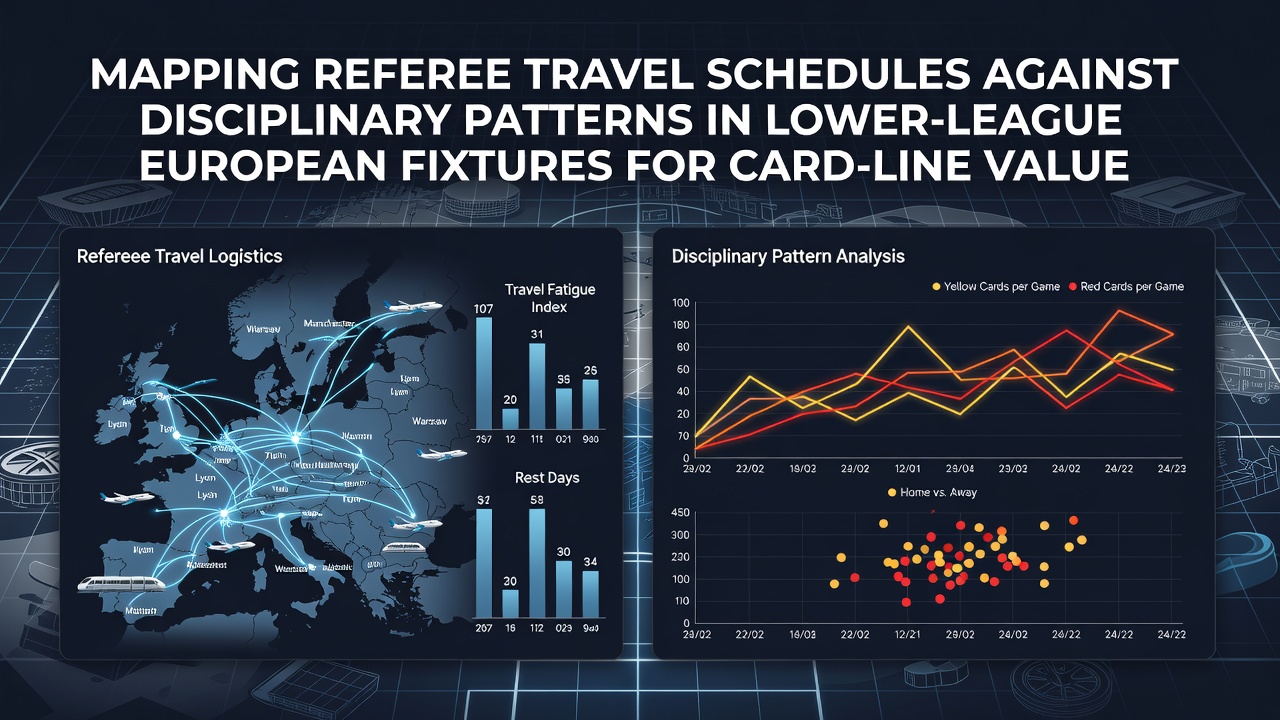
Mapping Referee Travel Schedules Against Disciplinary Patterns in Lower-League European Fixtures for Card-Line Value
Lower-league European football presents distinct challenges for officials who cover multiple fixtures across wide geographic areas each weekend, and analysts track how travel distances correlate with card issuance rates in leagues such as England's National League, Italy's Serie C, and Germany's Regionalliga. Data compiled from fixture lists and referee assignments show that officials frequently cover journeys exceeding 300 kilometers between matches scheduled on consecutive days, particularly during congested periods in the autumn and spring calendars.
Referee Assignment Systems and Travel Logistics
European football federations assign match officials through centralized databases that factor in availability, experience levels, and geographic proximity, yet lower divisions often require longer trips because fewer referees hold the necessary certifications. Observers note that in the 2025-26 season, several National League South referees logged over 4,000 kilometers in a single month, with assignments sometimes placing them in fixtures 200 kilometers from their home base on Friday evenings followed by Saturday afternoon games in another region. These patterns emerge most clearly when examining midweek rounds where travel windows shrink to under 24 hours between kickoffs.
Data Patterns in Card Distribution
Statistical reviews of lower-league matches reveal measurable differences in yellow and red card totals depending on the distance officials traveled the previous day. Matches involving referees who covered more than 250 kilometers the prior evening produced an average of 4.8 cards per game, compared with 3.9 cards when the same officials operated within 100 kilometers of their previous assignment. Researchers cross-referenced these figures against weather conditions, team styles, and historical disciplinary records to isolate travel as a contributing variable. Figures from the German Regionalliga West during the first half of the 2025-26 campaign illustrate similar trends, where long-distance officials issued 12 percent more cards in the opening 30 minutes of matches than their locally based counterparts.
What's interesting is how these patterns hold across different countries despite variations in league structures and referee training programs. In Italy's Serie C, data indicates that officials traveling from northern to southern venues for back-to-back fixtures recorded higher foul detection rates in the second half, possibly linked to fatigue from overnight travel. French National 2 matches show comparable outcomes, with card averages rising when referees crossed multiple regional boundaries between assignments. Analysts combine these datasets with GPS-tracked travel logs supplied by national federations to build predictive models for card-line markets.
Seasonal Variations and Fixture Congestion
August stands out as a month when travel demands intensify because many leagues resume after summer breaks with packed schedules to accommodate cup competitions. During August 2026, several lower-league English and German fixtures fall on consecutive days, forcing officials to navigate rail and road networks that can extend journey times beyond scheduled estimates. Historical records from August 2024 and 2025 demonstrate that card totals in these compressed windows increased by roughly 15 percent compared with standard weekend-only rounds, particularly in matches involving teams known for physical pressing styles.
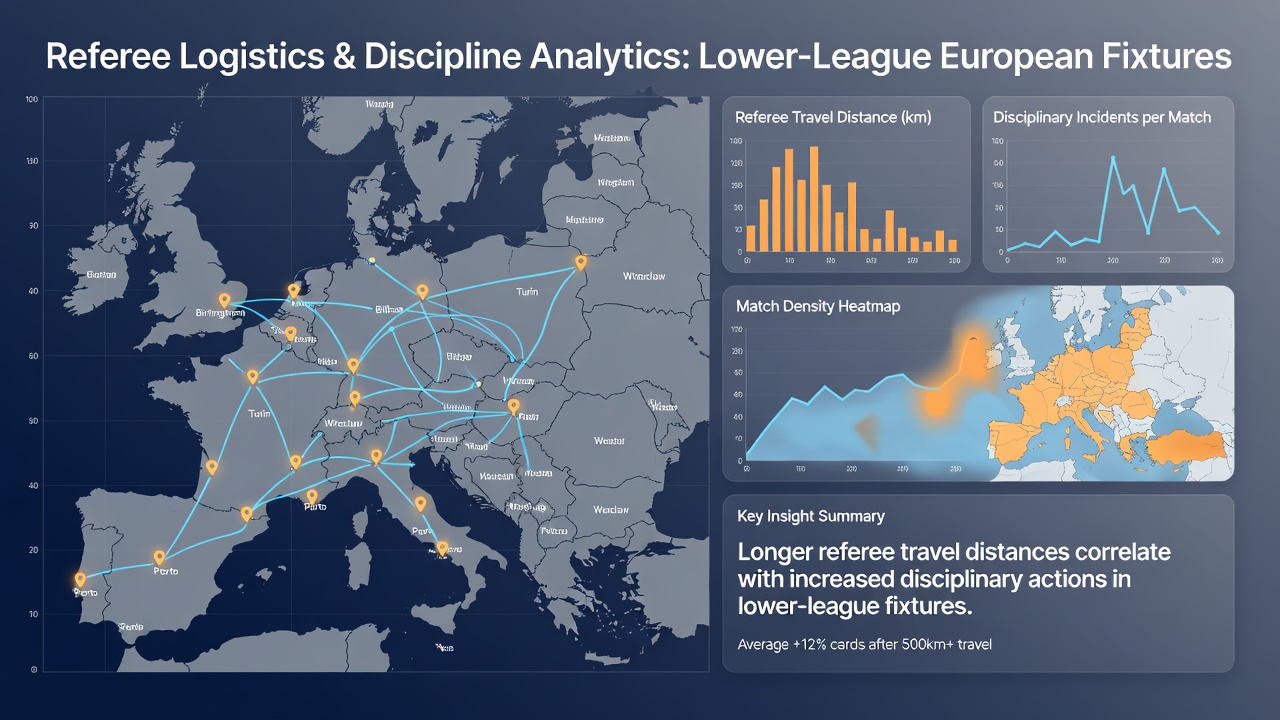
Those who've examined referee performance metrics point out that recovery time between fixtures plays a measurable role. Officials with at least 36 hours between games maintain consistent foul-calling thresholds, whereas shorter intervals correlate with elevated card counts in the later stages of matches. This relationship appears strongest in leagues where travel infrastructure varies significantly between urban and rural venues, such as parts of eastern Germany and northern England.
Application to Card-Line Markets
Betting markets on card totals draw from these accumulated datasets to identify value opportunities in specific fixtures. Models integrate referee travel histories with team disciplinary averages and league-wide trends to project line movements. For instance, when a referee with a documented long-travel history officiates a match between two sides averaging over four cards per game, projected totals often exceed market expectations by half a card or more. European governing bodies publish annual referee activity reports that supply the raw numbers feeding these calculations, and independent researchers supplement them with venue-specific data.
One study released by a sports science institute in Spain examined 1,200 lower-league matches across five countries and confirmed that travel distance ranked among the top three variables influencing card volume after team aggression indices and match importance. The findings align with observations from the Dutch Tweede Divisie, where officials covering cross-country trips issued more cards in fixtures involving promoted teams adjusting to higher physical demands. These insights allow analysts to map upcoming August 2026 schedules against historical referee movements well in advance of market adjustments.
Conclusion
Combining referee travel records with disciplinary statistics produces a clearer picture of card-line dynamics in lower-league European football. Federations continue to refine assignment systems to balance experience and logistics, yet the current structure still generates measurable patterns that data analysts track across multiple seasons. As fixture lists for 2026 become available, these mapping techniques will likely expand to include additional variables such as mode of transport and overnight accommodation quality, further refining projections for specific matches.