How Substitution Patterns in Rugby Union Alter Try-Scoring Lines During Six Nations Championship Fixtures
Substitution Rules and Their Role in Match Dynamics
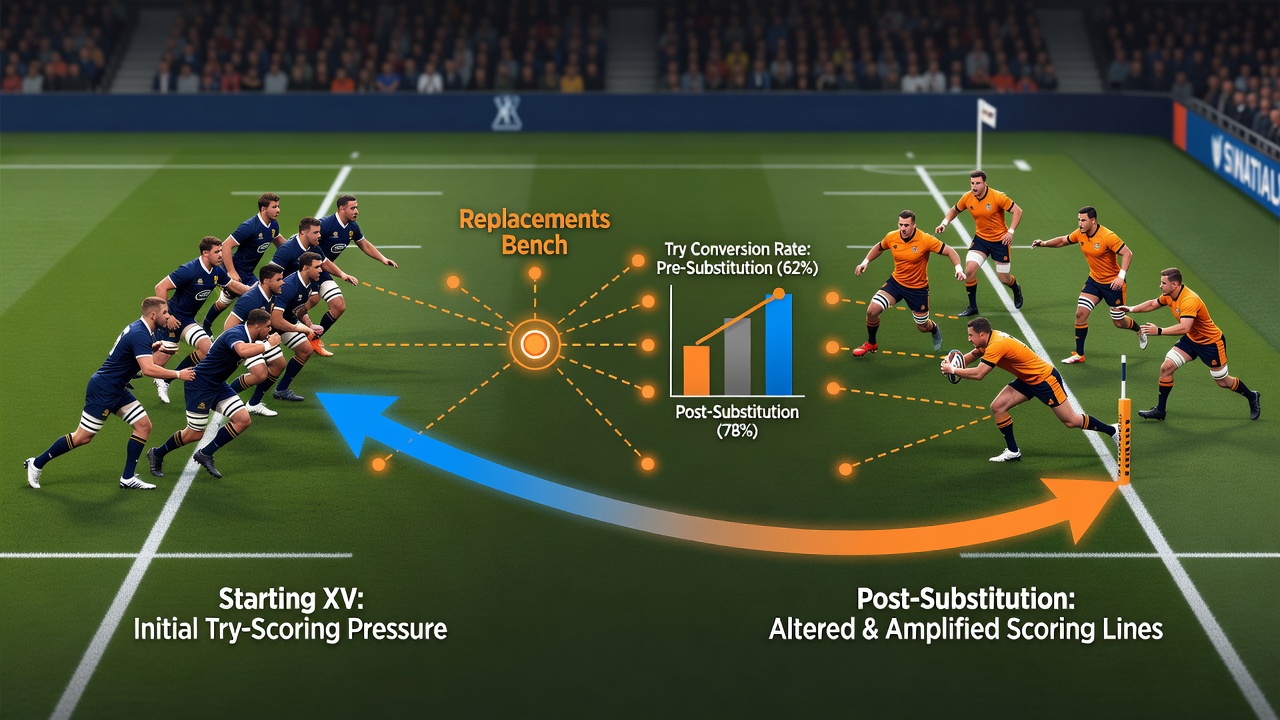
Substitution rules in rugby union permit teams to replace up to eight players during a match, with front-row specialists required to maintain scrum stability under World Rugby regulations. These changes often occur between the 50th and 70th minutes when fatigue sets in, allowing coaches to introduce players who can sustain or increase attacking intensity. Data from recent championships shows that teams making multiple back-row replacements tend to maintain higher tackle completion rates while shifting focus toward line breaks and support runs.
Front-row changes affect set-piece execution directly, since new props and hookers bring fresh power into scrums and mauls that create try-scoring opportunities near the opposition line. Backs substitutions, meanwhile, introduce speed and distribution skills that alter how teams exploit wide channels once the game opens up. Observers note that these tactical adjustments frequently coincide with spikes in try attempts during the final quarter of fixtures.
Patterns Observed Across Six Nations Campaigns
Championship records indicate that teams using early bench rotations in the second half score tries at a higher rate when they maintain possession through multiple phases. French sides have historically deployed large forwards around the 55-minute mark to dominate breakdowns, leading to increased maul drives that result in tries. Italian teams, by contrast, often hold substitutions until later to preserve defensive structures before launching counter-attacks once replacements arrive.
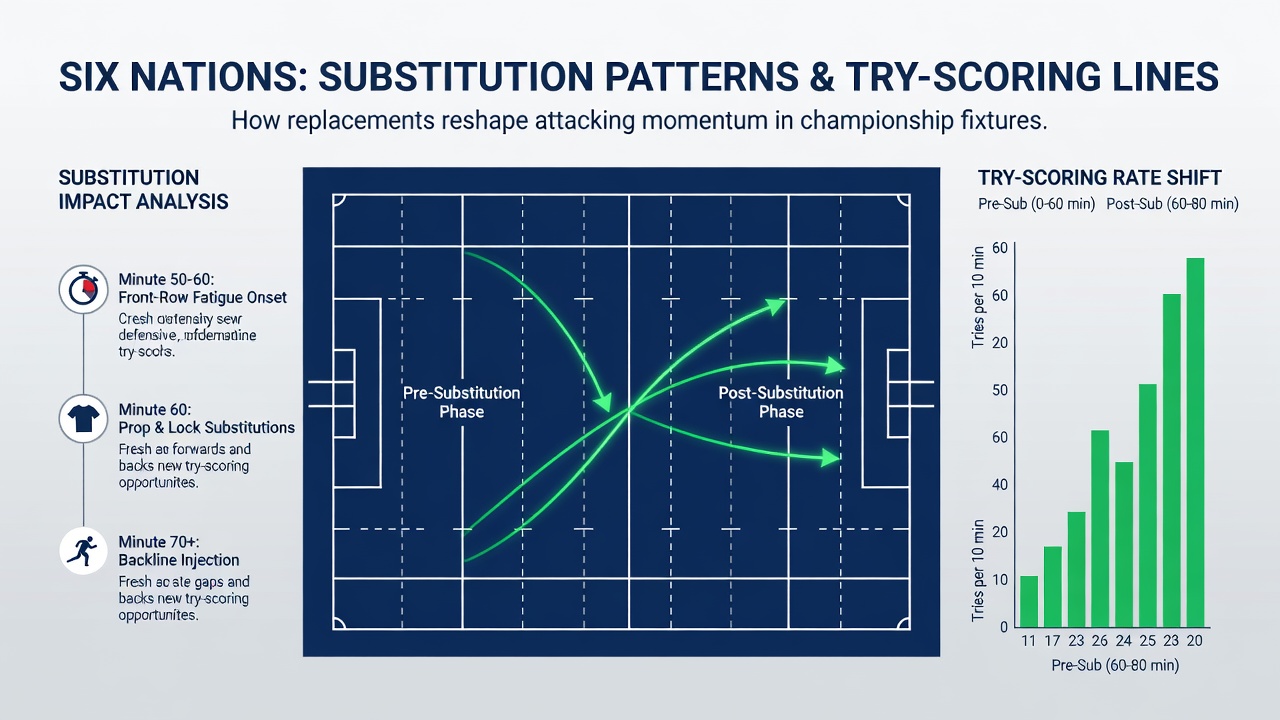
Analysis of match statistics reveals that second-half try tallies rise when at least three forwards enter the field within a 10-minute window. This timing aligns with periods when initial starting packs show measurable drops in work rate, measured through GPS data collected by national unions. English and Scottish squads have demonstrated similar trends in fixtures against Wales, where fresh carriers help maintain momentum during attacking sequences that stretch defensive lines.
Positional Impacts on Try-Scoring Outcomes
Loose forwards introduced from the bench frequently contribute to try-scoring lines by securing quick ball at rucks and providing offload options in contact. Their arrival correlates with higher numbers of line breaks in the 60-to-80-minute period, according to aggregated performance reports from tournament organizers. Wing and fullback replacements add pace that exploits tiring defenses, particularly when teams shift to wider attacking shapes after the hour mark.
Centers and fly-halves coming on tend to refine kicking games and structured attacks, which can convert territory into points through structured phases rather than unstructured running. Research conducted by sports science departments at universities in Australia has tracked how these changes influence ball-in-play time and the frequency of try-scoring entries into the opposition 22-meter area.
Hooker replacements also play a key role in lineout accuracy, which feeds into driving mauls that account for a measurable portion of tries scored in championship games. Teams that time these changes to coincide with opposition fatigue often see improved conversion rates from lineout platforms into five-meter drives.
Data Trends from Championship Fixtures
Match reports compiled by national federations show that fixtures featuring four or more total substitutions by both sides produce elevated try counts in the closing stages. This pattern holds across home and away games, with weather conditions and pitch state exerting secondary influence on the extent of the increase. Teams that retain at least two recognized finishers on the bench until the final 20 minutes consistently record more tries from broken-field situations.
European club competition data, cross-referenced with Six Nations performances, confirms that player rotation strategies developed in domestic leagues carry over into international windows. Coaches apply these approaches to manage workload during the compressed February-to-March schedule, resulting in measurable shifts in attacking output after the 50-minute mark.
Strategic Timing and Its Effects
Coaching staffs plan substitutions around key game states, such as when a team trails by a single score or holds a narrow lead. Early changes to the front row secure scrum dominance that prevents opposition turnovers, while later backline introductions target space created by defensive fatigue. Tournament statistics indicate that these timed entries raise the probability of tries from second-phase possession and support play.
International governing body guidelines allow temporary replacements for blood injuries or head assessments, which can further disrupt patterns if they occur mid-phase. Such unplanned substitutions occasionally accelerate attacking momentum when a high-impact carrier enters the field unexpectedly.
Conclusion
Substitution patterns in rugby union shape try-scoring lines by refreshing physical output and altering tactical options at critical moments in Six Nations matches. Front-row, forward, and backline changes each contribute distinct effects on set-piece stability, breakdown efficiency, and wide attacking width. Records from past championships demonstrate consistent correlations between bench usage timing and second-half try volumes across participating nations. These dynamics continue to influence how teams approach rotation planning ahead of future tournaments.