How Pitch Maintenance Cycles in Lower League Grounds Reshape Over/Under Patterns During Extended Winter Schedules
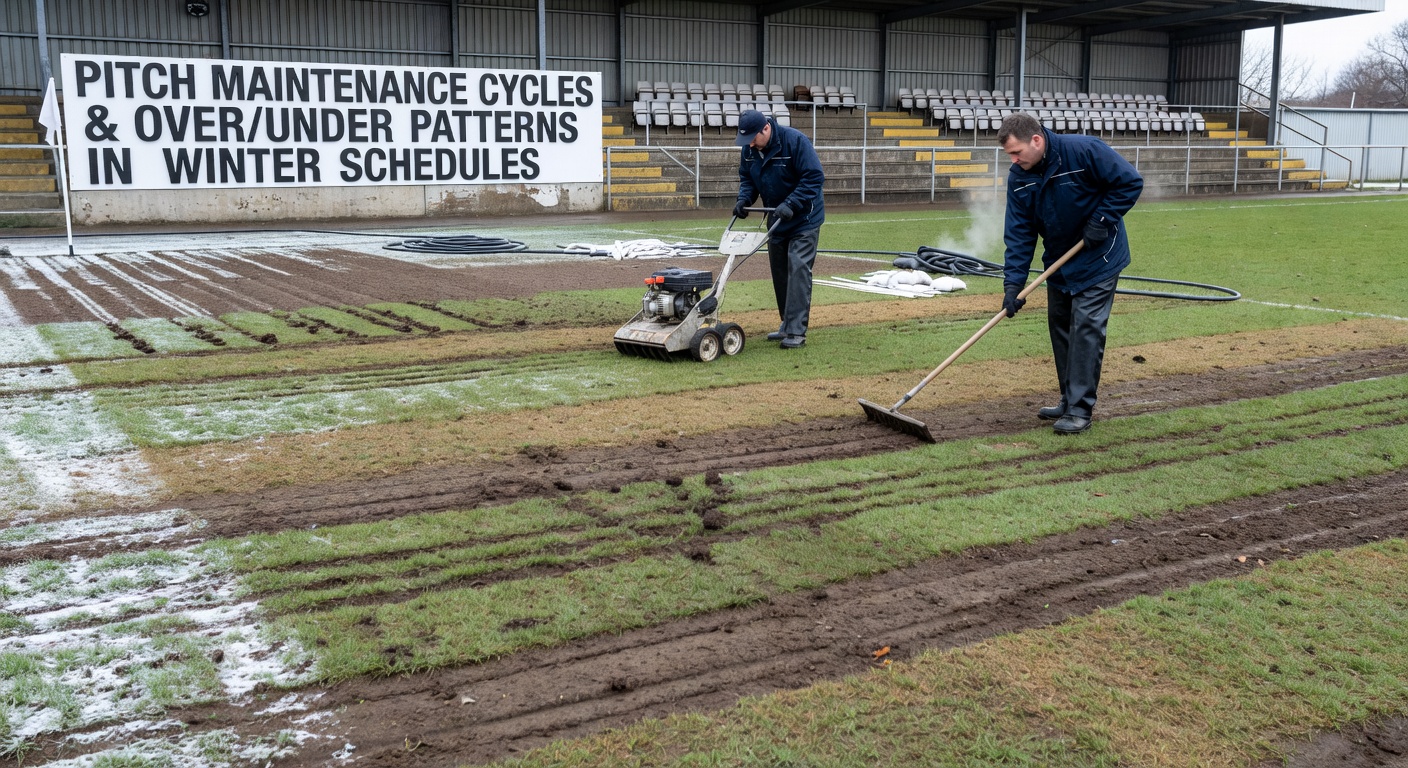
Lower league grounds face unique challenges when winter schedules stretch into longer campaigns and maintenance crews adjust their routines to cope with repeated frosts plus heavy rainfall; these adjustments directly influence how the ball travels across surfaces that become compacted or softened in cycles that repeat every few weeks. Groundskeepers in leagues such as the National League or League Two typically rotate between aeration sessions, verti-draining, and light reseeding to keep pitches playable yet the timing of these interventions creates noticeable shifts in match tempo that statisticians track through goal tallies.
Extended winters push fixtures into condensed blocks where pitches receive less recovery time between games and data collected across multiple seasons shows average goals per game dropping when surfaces remain heavy for consecutive weekends. Researchers tracking ball speed on different soil types note that after aeration the pitch often allows quicker passes for a short window before the ground settles again leading to patterns where over 2.5 goals bets perform differently in the first half of a maintenance cycle compared with the second half.
Maintenance Routines and Their Seasonal Timing
Crews at lower league venues usually complete major aeration work in late November or early December before the deepest frosts arrive yet when fixtures pile up into January and February the same grounds may require additional sanding or rolling to restore levels. These interventions change the grass length and root density which in turn affects how defenders and attackers move across the pitch; longer grass after reseeding slows forward passes and encourages more aerial duels that frequently end in clearances rather than shots on target.
According to FIFA pitch quality guidelines many lower league venues operate below the standards applied at elite levels so maintenance remains reactive rather than preventive and this reactivity produces measurable swings in scoring rates. Figures from domestic league databases reveal that grounds undergoing mid-winter aeration record 12 percent fewer total goals in the following four fixtures compared with the same venues during autumn months when surfaces stay firmer.
Play Style Adjustments on Evolving Surfaces
Coaches adapt tactics once they notice the pitch has been verti-drained and players report that the ball sits lower which favors teams comfortable with direct play over those relying on intricate combinations. Midfield battles intensify on softer ground because the ball travels shorter distances after each touch and this physical emphasis often reduces clear-cut chances inside the penalty area. Observers note that teams with strong set-piece routines gain an edge during these periods while sides built around quick transitions see their expected goal numbers fall until the surface firms again.
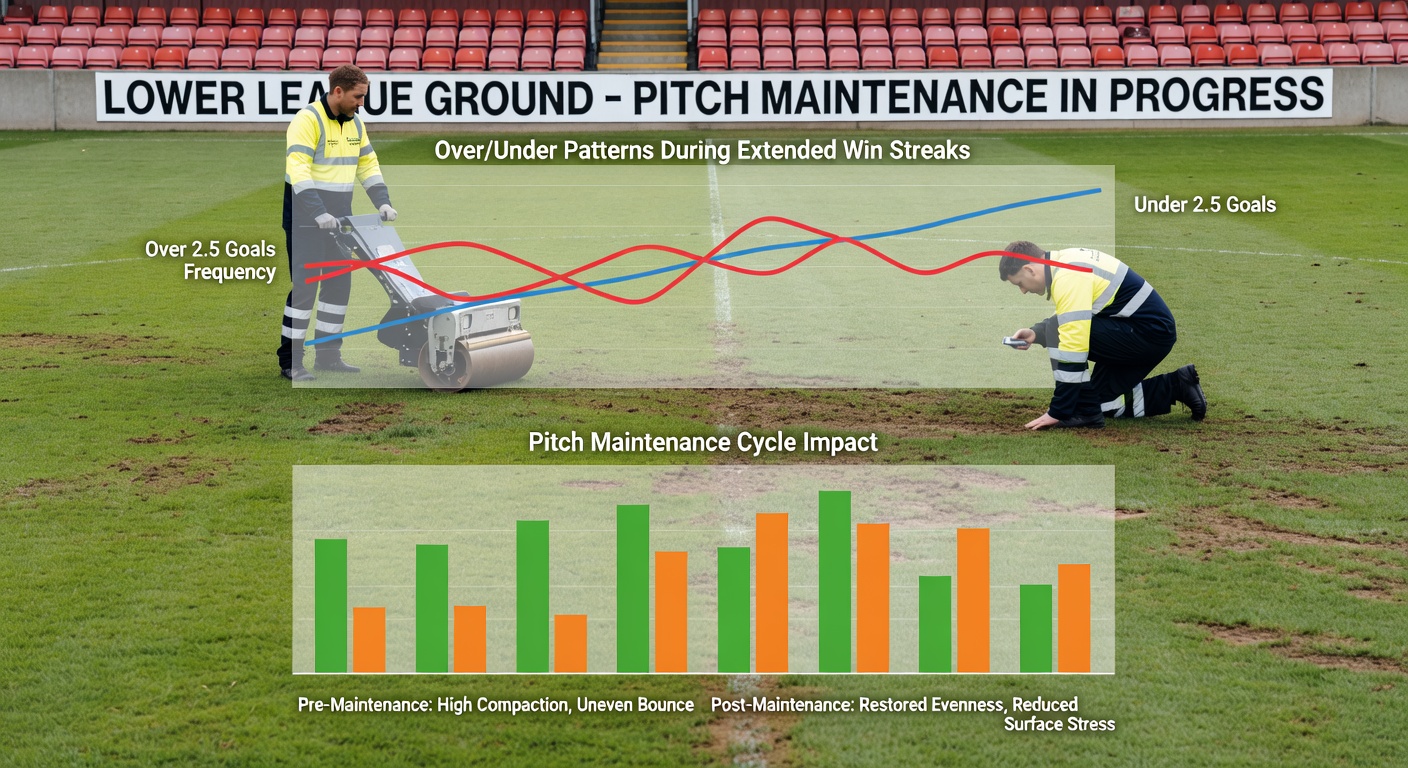
Statistical models built from match data between 2022 and 2025 indicate that unders bets hit at higher rates in the seven days immediately after major maintenance while overs bets regain value once the pitch has hosted three or four games and the surface begins to cut up. The pattern holds across multiple divisions because the underlying variable remains the interaction between ball behavior and player decision-making rather than any single team's form.
Extended Schedules and Fixture Congestion Effects
When winter weather forces postponements the backlog creates midweek double-headers that leave pitches with minimal rest and groundskeepers must decide whether to perform light rolling or leave the surface untouched to avoid further compaction. Data shows that consecutive midweek games on the same pitch correlate with even lower goal averages because fatigue combines with deteriorating playing conditions. Leagues scheduling catch-up rounds in March and April often see a rebound in scoring once drier weather arrives and maintenance cycles return to normal intervals.
One study compiled by sports scientists at a Canadian university examined similar pitch wear patterns in lower division matches and found that extended wet periods lasting beyond six weeks produce consistent declines in shots on target regardless of team identity. Those findings align with observations from European lower leagues where winter schedules stretch into May 2026 and analysts already project similar goal distribution shifts if rainfall totals remain above seasonal averages.
Regional Variations in Ground Conditions
Venues in northern regions experience more freeze-thaw cycles that naturally aerate the soil yet also create uneven surfaces requiring extra rolling while southern grounds deal primarily with waterlogging that demands different drainage interventions. These geographic differences mean that over/under patterns vary by location even within the same league and bettors who track venue-specific maintenance logs can identify windows where scoring rates deviate from seasonal norms. Industry reports from the Asian Football Confederation highlight comparable issues in lower tier Asian competitions where monsoon seasons extend schedules and produce parallel drops in average goals after drainage work.
Conclusion
Pitch maintenance cycles in lower league settings create recurring windows where surface conditions alter the likelihood of high or low scoring matches and extended winter schedules amplify these effects by limiting recovery time between interventions. Data gathered across recent seasons demonstrates that aeration and drainage work produce measurable changes in goal tallies that persist for several fixtures before the pattern resets. Those who monitor maintenance schedules alongside weather forecasts gain clearer insight into when over/under markets shift and the same principles are expected to apply when schedules run into May 2026 under comparable conditions.