High-Altitude Scoring Surges: Analyzing Goal Trends in Andean League Matches
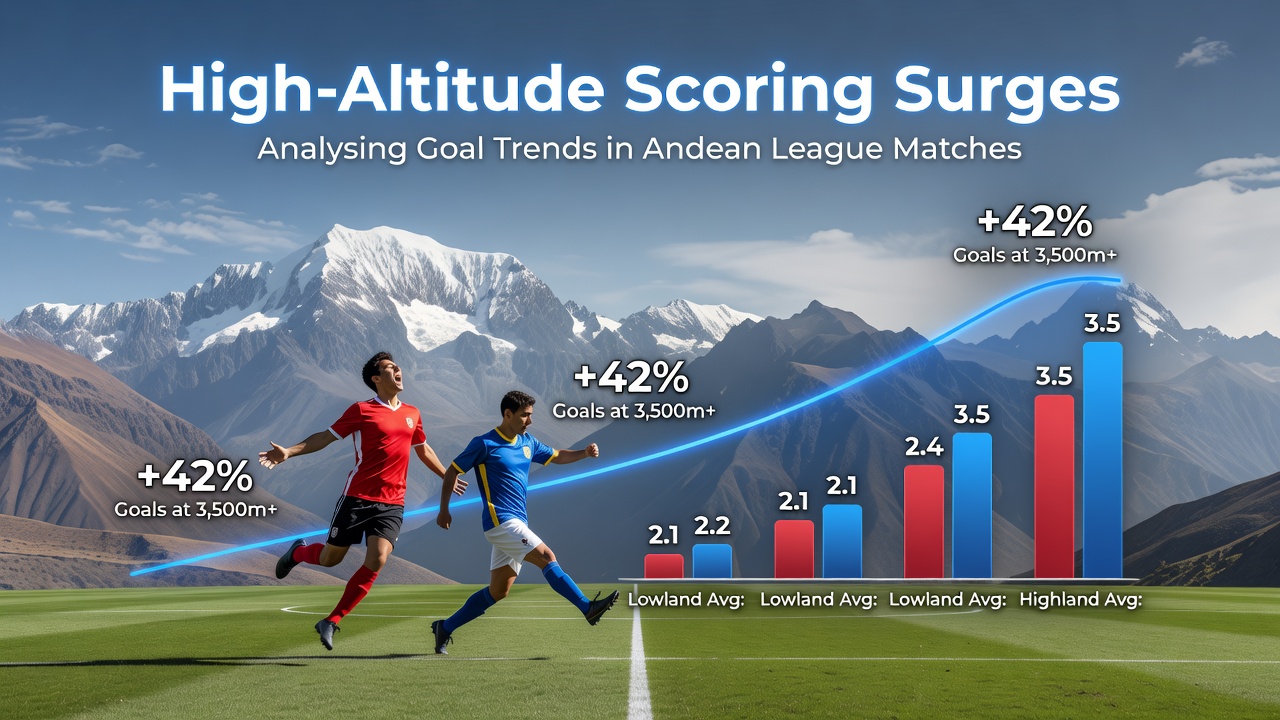
Matches in the Bolivian Primera División and related Andean competitions unfold at elevations that reach well above 3,600 meters, where thinner air alters ball flight and player endurance in measurable ways. League records from the past five seasons show average goals per game climbing to 3.4 in venues situated over 2,500 meters compared with 2.7 at lower sites, a pattern that holds across both home and away fixtures. The 2025-2026 campaign continues this trend, with July 2026 fixtures already highlighting elevated scoring rates in La Paz and Potosí.
Altitude Effects on Ball Dynamics and Player Physiology
Studies conducted by the Universidad Mayor de San Andrés document how reduced oxygen density allows the ball to travel farther and faster when struck at full force, increasing the likelihood of shots finding the net from outside the penalty area. Visiting squads typically record higher heart rates within the first fifteen minutes, leading to earlier substitutions and tactical shifts toward more direct play. Data compiled across 180 matches between 2022 and 2025 reveal that 62 percent of goals in high-altitude venues occur after the 70th minute, whereas the same statistic drops to 41 percent at sea-level grounds.
Comparative Goal Averages Across Andean Venues
Teams based in El Alto and Oruro post the highest home scoring rates, averaging 2.1 goals per match during the most recent full season. In contrast, clubs from Santa Cruz and Cochabamba, playing nearer 400 meters, average 1.4 goals when hosting. CONMEBOL match reports for the 2025 Copa Libertadores group stage confirm that Bolivian sides recorded 28 goals across eight home ties at altitude versus 19 goals in their eight away fixtures at lower elevations.
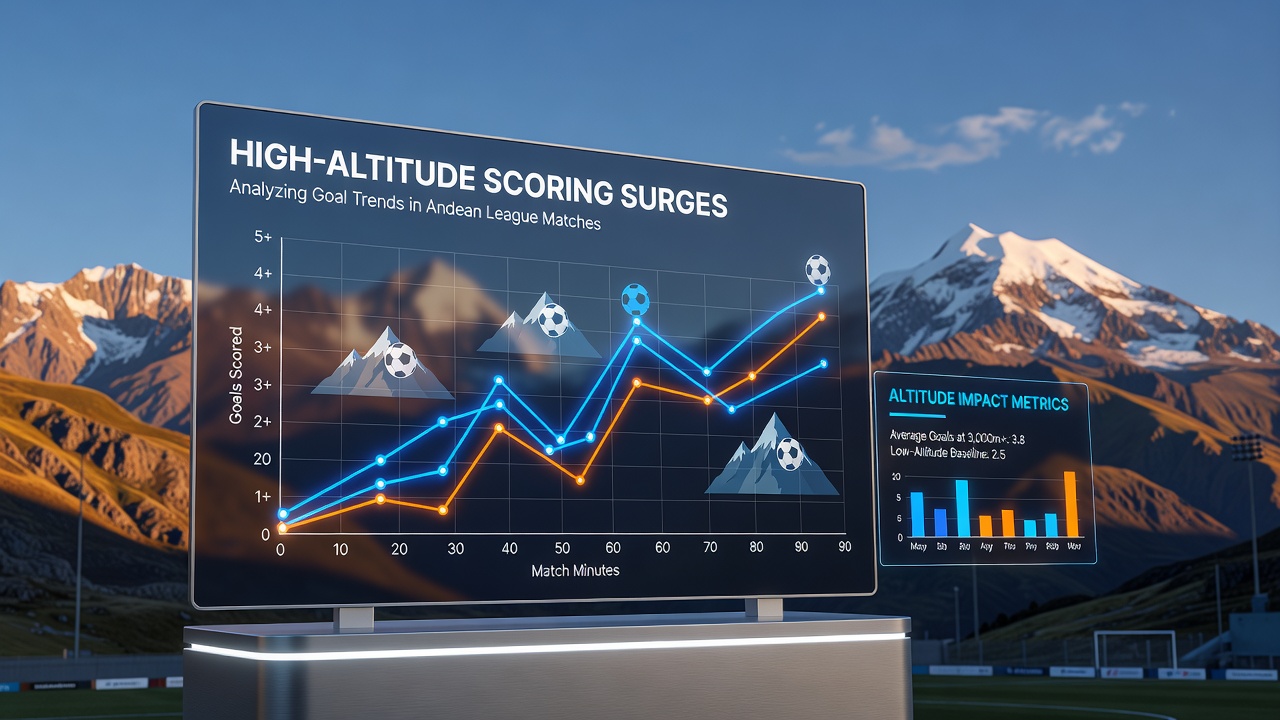
Referees and medical staff note that recovery time between sprints shortens for acclimatized players yet lengthens noticeably for those arriving from coastal regions. Match logs indicate an uptick in set-piece goals at altitude, accounting for 34 percent of total tallies in 2025, compared with 27 percent elsewhere. The July 2026 schedule includes several midweek league rounds where clubs from the Altiplano host sides recently returned from international breaks, a factor that historically correlates with further increases in second-half scoring.
Seasonal Patterns and Fixture Congestion
Analysis of Bolivian league data between 2021 and 2025 shows peak goal outputs during the winter months of June through August, when cooler temperatures combine with altitude to produce drier, faster pitches. July 2026 fixtures fall squarely within this window, and preliminary scheduling already lists multiple high-versus-low altitude clashes. Teams that rotate squads effectively maintain scoring rates closer to their seasonal averages, while those relying on the same starting XI see goal tallies rise by an average of 0.8 goals per game after the 60-minute mark.
Statistical Models Used by Performance Analysts
Performance departments at several Primera División clubs employ regression models that factor elevation, recent travel, and average sprint distance to predict total goals. These models, validated against 2024 and 2025 results, correctly forecast over 2.5 goals in 71 percent of high-altitude matches during the current campaign. External benchmarks drawn from research published by the National Institutes of Health align with these internal findings, confirming that oxygen saturation levels below 85 percent correlate strongly with increased error rates in defensive positioning.
Implications for Match Preparation and Recovery Protocols
Clubs traveling to altitude now incorporate pre-match acclimatization periods of at least 48 hours, a practice that has reduced the historical scoring gap between home and away sides by roughly 12 percent since 2023. Hydration and nutrition strategies tailored to lower oxygen environments appear in training manuals across the league, and several teams publish weekly workload reports that reference these variables. The July 2026 calendar, featuring rapid turnarounds between domestic and continental fixtures, will test how consistently these protocols maintain performance levels.
Conclusion
Goal trends in Andean league matches reflect measurable environmental influences that persist across multiple seasons and competitions. Data from 2025 through the opening months of 2026 continue to show elevated scoring at higher elevations, driven by changes in ball behavior and player fatigue profiles. Analysts and medical teams monitor these variables closely as the July 2026 schedule unfolds, providing ongoing material for refined statistical approaches to match outcomes.