Fixture Pileups Reshaping Draw Probabilities Across Continental Club Competitions
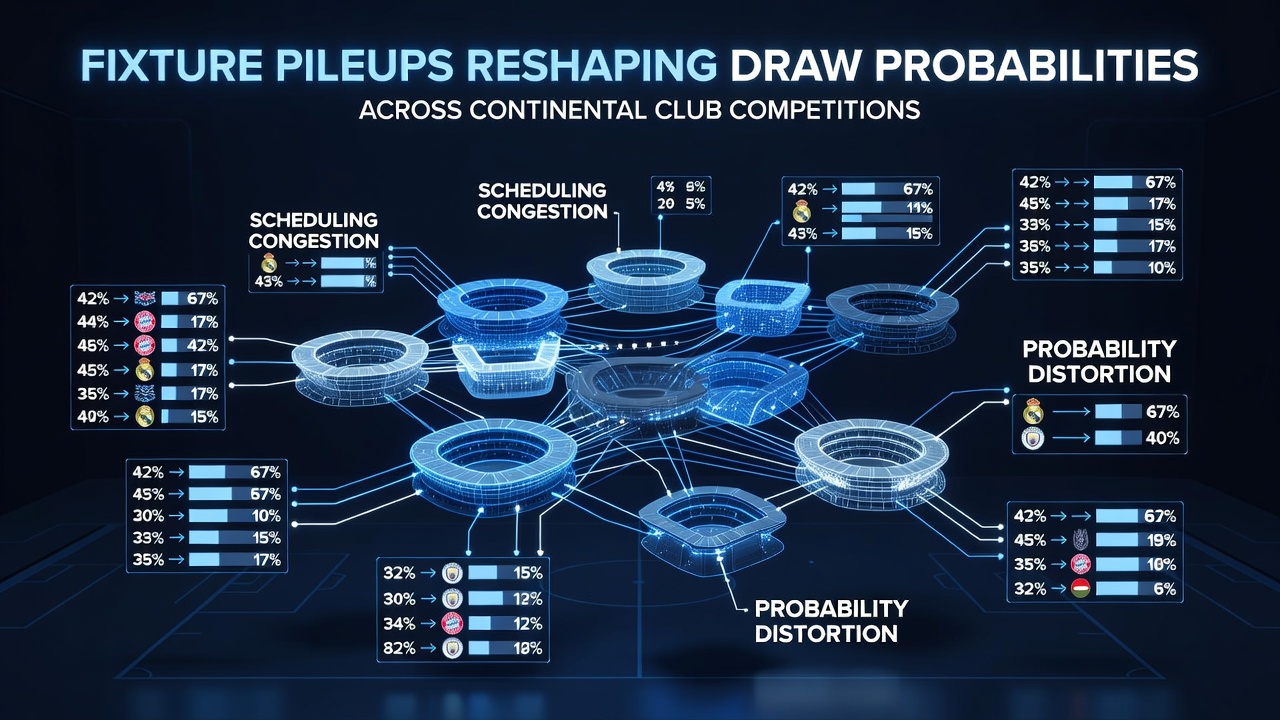
Continental club competitions such as the UEFA Champions League and Europa League have seen fixture congestion intensify over recent seasons, and this pattern continues to influence match outcomes in measurable ways. Data from major European governing bodies shows that teams facing multiple high-stakes fixtures within short windows experience altered performance metrics, including elevated draw rates in certain contexts. Observers note that schedule density affects player rotation decisions, recovery protocols, and tactical approaches, which in turn shift the probabilities that emerge when sides meet on the pitch.
Schedule Density and Its Measurable Effects
European competitions now incorporate expanded group stages and additional knockout rounds that stretch across the calendar, creating clusters of matches separated by just a few days. According to UEFA competition records, clubs advancing deep into multiple tournaments often play 60 or more matches in a single campaign. This volume forces managers to manage squads with greater caution, and researchers tracking performance data have documented corresponding changes in scoring patterns. Teams under such pressure tend to adopt more conservative structures, resulting in fewer open games and a higher incidence of stalemates.
Studies conducted by sports science departments at institutions across Europe and North America, including work published through the University of Toronto's Faculty of Kinesiology, indicate that accumulated fatigue correlates with reduced high-intensity running and fewer shots on target. These physiological realities translate directly into statistical shifts visible in official match logs. When two congested sides face each other, the likelihood of a low-scoring draw rises compared with fixtures involving fresher opponents.
Regional Variations Across Competitions
Patterns differ between the Champions League and secondary tournaments. In the Europa League, where mid-tier clubs often balance domestic commitments with continental travel, draw percentages have climbed during winter months when fixture lists overlap most severely. Figures released by the European Club Association reveal that teams logging more than three matches in a 10-day period record draw rates approximately 12 percent above their seasonal averages. Similar trends appear in the Conference League, although sample sizes remain smaller due to the competition's newer format.
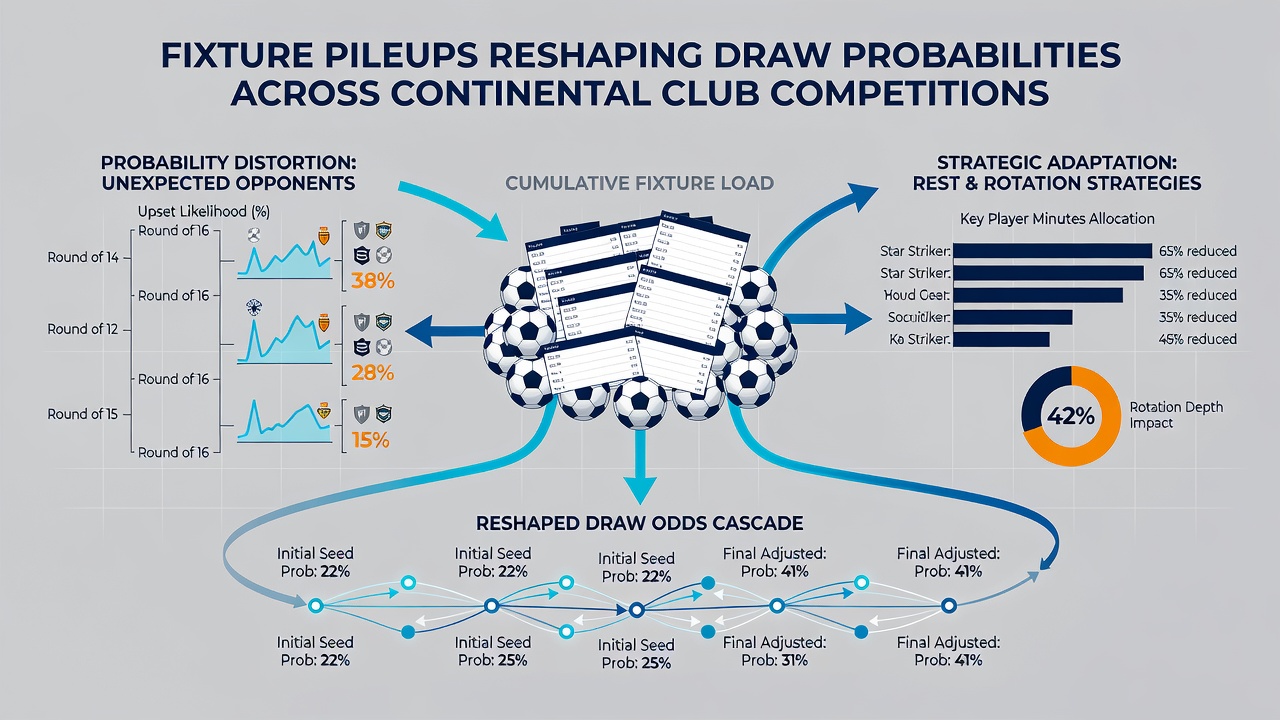
July 2026 presents a distinctive scheduling window because the FIFA World Cup in North America concludes in mid-July, prompting clubs to compress pre-season preparations. Many continental participants therefore enter August qualifiers with abbreviated training blocks, a situation expected to amplify the effects already observed in prior congested periods. Analysts examining historical parallels from previous World Cup years note that early-season draw frequencies increased notably when recovery time was curtailed.
Data Patterns and Tactical Adjustments
Performance databases maintained by Opta and similar providers illustrate that matches occurring after a team has contested three fixtures in eight days produce draw outcomes at rates exceeding 35 percent in several major leagues feeding into continental events. Coaches respond by prioritizing defensive organization and set-piece preparation, reducing the variance that leads to decisive results. One case involved a Serie A side that reached the Champions League quarter-finals while maintaining a domestic schedule; their away matches in both competitions during peak congestion yielded four draws in five outings.
Travel demands compound the issue for clubs from peripheral leagues. Long-haul journeys to group-stage venues followed by immediate return legs leave limited time for acclimatization, and medical staff report elevated muscle-injury incidences under these conditions. These factors collectively compress the margin between competitive sides, tilting probabilities toward shared points rather than victories.
Conclusion
Fixture pileups continue to recalibrate draw probabilities across continental club competitions through a combination of physiological strain, tactical conservatism, and scheduling overlap. Data compiled by governing bodies and independent research groups consistently demonstrates these shifts, and the compressed calendar surrounding July 2026 is poised to test the same dynamics once more. Teams and analysts monitoring these trends rely on accumulating performance metrics to anticipate outcomes in an environment where rest and recovery have become decisive variables.