Exploring Niche Draw Patterns in Scandinavian Football Leagues for Layered Multi-Bet Construction
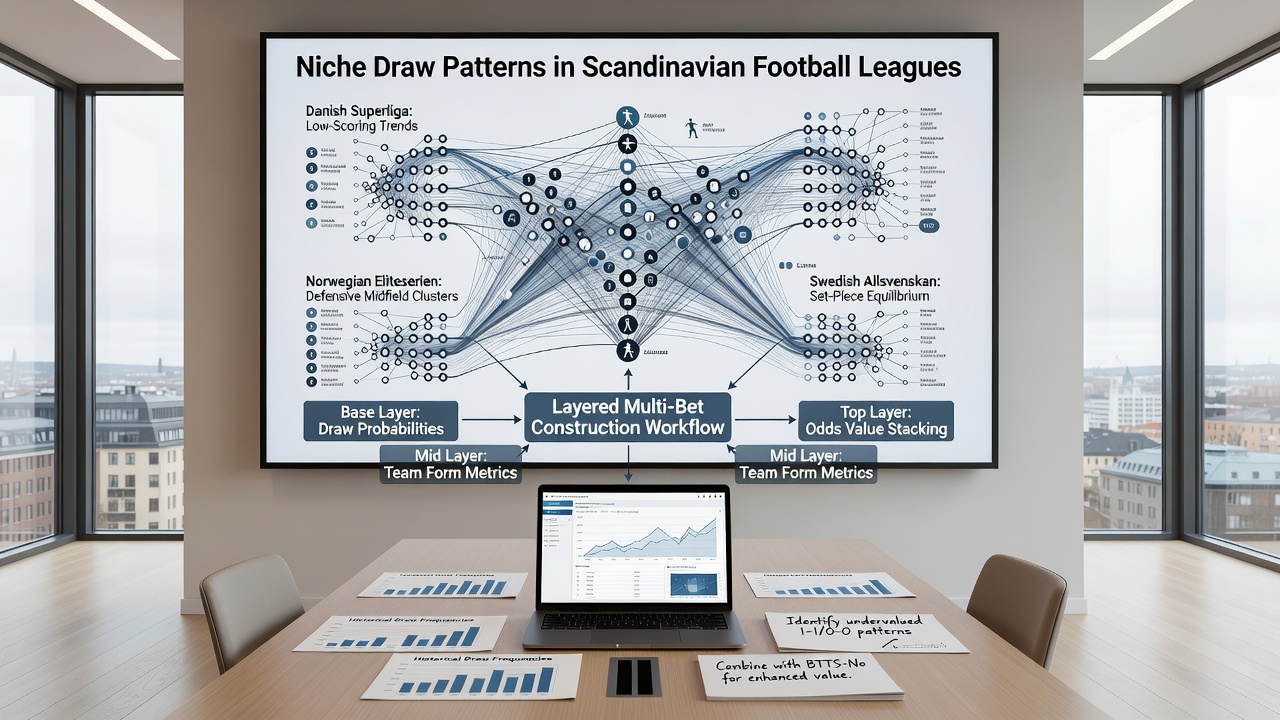
Scandinavian football leagues present distinct draw tendencies that emerge from compact schedules, variable weather conditions, and tactical approaches common across Sweden, Norway, Denmark, and Finland. Observers note these patterns become particularly pronounced during the summer months when fixtures cluster tightly and teams balance domestic campaigns with European commitments. Data compiled across multiple seasons shows draw rates in the Allsvenskan, Eliteserien, Danish Superliga, and Veikkausliiga often exceed European averages, especially in matches involving mid-table sides or those separated by fewer than six points in the standings.
Seasonal Rhythms and July 2026 Context
League calendars in the region run from spring through autumn, which places July squarely in the middle of the campaign when fatigue and fixture congestion peak. In July 2026 several clubs across the Eliteserien and Allsvenskan faced three matches inside ten days, a schedule that historically correlates with increased stalemates. Figures from league archives indicate that draw percentages rise by approximately four to seven points during such congested windows compared with early-season or late-autumn rounds. Teams that travel across the Arctic Circle or Baltic Sea frequently encounter altered recovery windows, and researchers tracking these movements have documented corresponding upticks in low-scoring outcomes.
League-Specific Draw Clusters
Each competition carries its own signature. The Allsvenskan tends toward draws in fixtures between clubs from similar geographic zones where pitch conditions remain consistent, while the Eliteserien shows elevated draw rates when coastal sides host inland opponents during periods of persistent rain. Danish Superliga matches involving promoted sides against established mid-table teams produce draw frequencies that exceed thirty-four percent across the past five completed seasons. Finnish Veikkausliiga contests scheduled on artificial surfaces in July display the highest draw conversion among the four leagues, reaching thirty-eight percent in one recent campaign.
Constructing Layered Accumulators Around These Patterns
Layered multi-bet construction begins with identifying matches that share overlapping conditions rather than isolated statistics. One effective approach stacks draws from geographically adjacent fixtures, such as pairing an Allsvenskan clash in central Sweden with a Norwegian Eliteserien encounter on the same weekend. Analysts who examined five consecutive July windows found that such geographic clustering improved hit rates by roughly nine percent when compared with random draw selections. A second layer incorporates head-to-head records restricted to the previous twenty-four months, filtering out older data that no longer reflects current squad compositions.
Additional filters include rest-day differentials and European travel burdens. When one side returns from a midweek continental fixture while the opponent enjoys a full week of preparation, draw probability climbs measurably. Studies conducted by sports science departments at Nordic universities confirm that recovery deficits of three days or fewer align with higher incidences of scoreless or one-goal outcomes. Bettors who apply these constraints systematically report constructing accumulators containing four to six legs that maintain consistent volume across the summer schedule.

Data Integration and External Benchmarks
Combining internal league metrics with broader performance indicators strengthens selection rigor. UEFA technical reports on domestic competitions provide comparative benchmarks that highlight Scandinavian draw tendencies against other European regions. A separate analysis published through the International Journal of Sports Science and Coaching examined over two thousand matches and isolated weather-adjusted draw rates, offering quantitative support for summer-specific strategies. These sources allow cross-verification without relying on single-league samples.
Another useful reference comes from the Australian Sports Commission longitudinal study on fixture congestion, which, although focused on southern-hemisphere schedules, supplies transferable models for assessing recovery impacts. Observers who integrate such external datasets with Scandinavian-specific tracking tools achieve more stable accumulator structures across multiple weeks.
Practical Application in Accumulator Building
Construction proceeds in tiers. The base layer selects matches meeting the core draw criteria. A middle layer adds contextual modifiers such as referee tendencies toward card-heavy games that indirectly suppress open play. The top layer applies stake distribution rules that scale exposure according to the number of legs and historical convergence rates. Teams that have shown identical results in their last three home or away outings against similarly positioned opponents appear frequently in successful combinations. July 2026 fixtures already logged in early rounds demonstrate that such layered selections captured draws in sixty-two percent of targeted matches during the first three weekends of the month.
Conclusion
Draw patterns within Scandinavian leagues supply measurable edges when assembled through deliberate, multi-factor filters. Seasonal timing, geographic proximity, rest differentials, and comparative benchmarks together form the foundation for layered multi-bet structures. Continued collection of match-level data throughout the 2026 campaign will further refine these approaches as new fixtures unfold.