Examining penalty shootout frequencies in knockout stages of continental club competitions
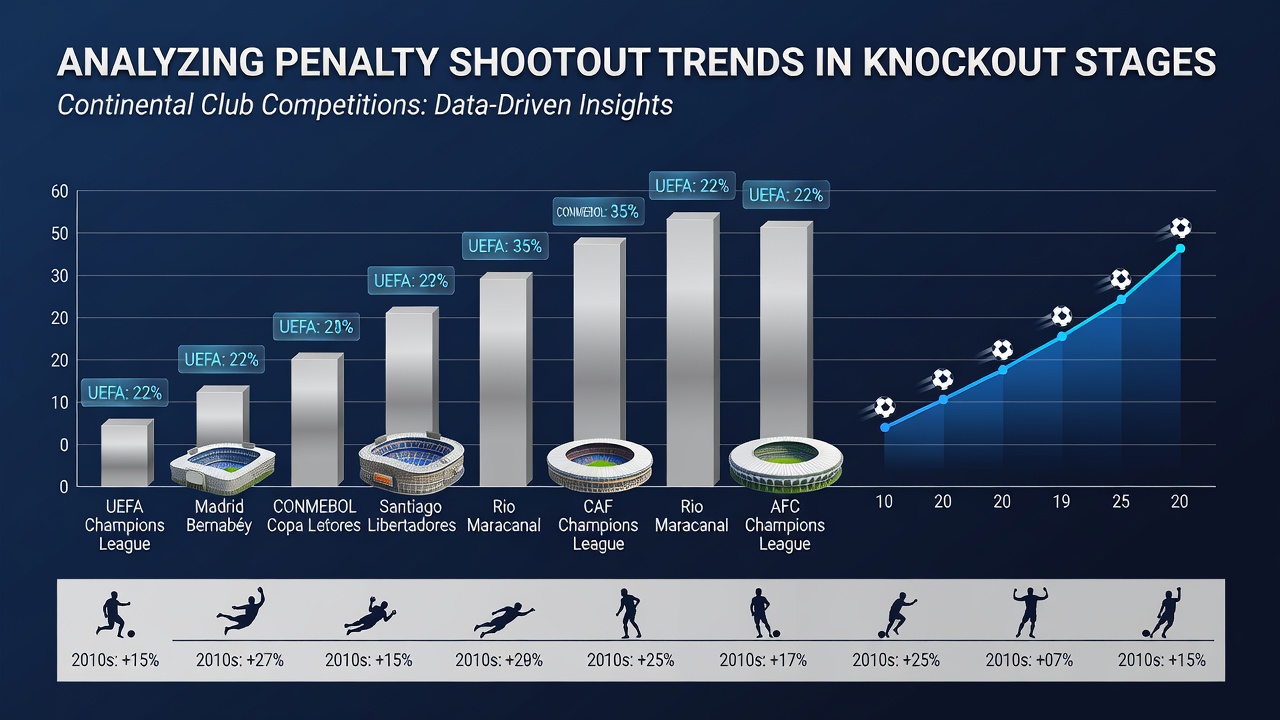
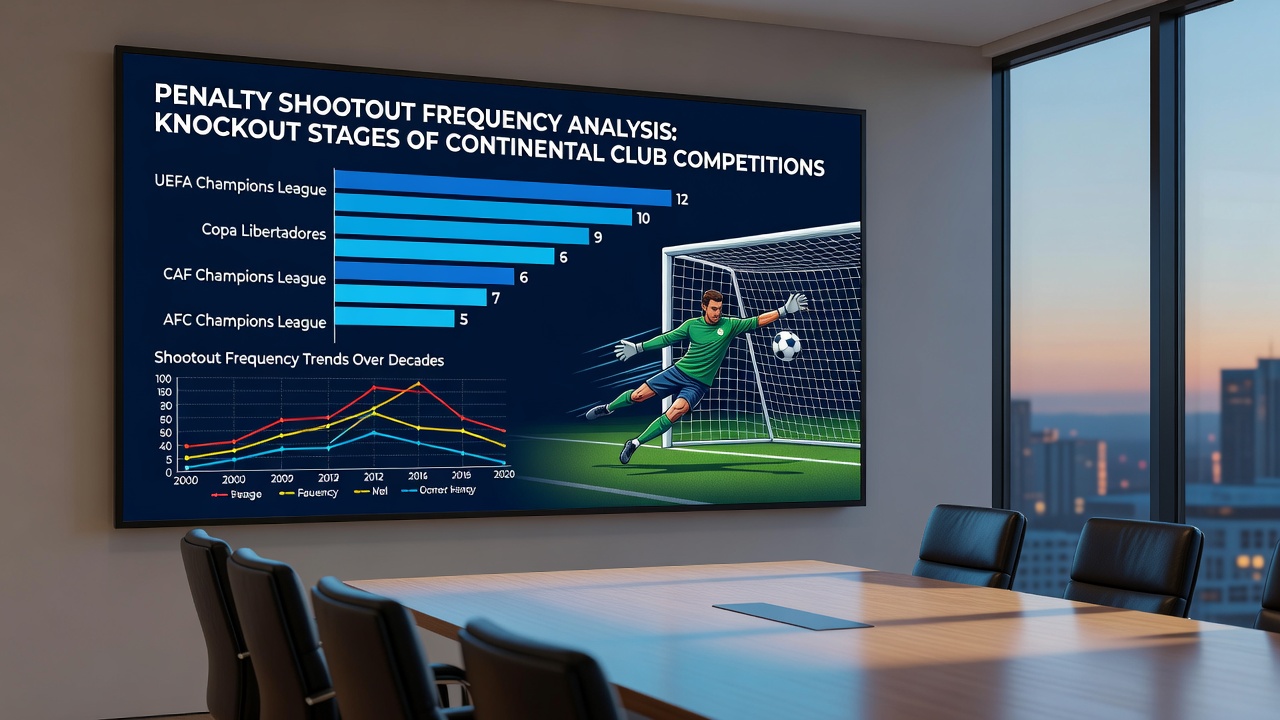
Continental club competitions feature knockout stages where matches can extend to penalty shootouts when scores remain level after extra time, and data from recent seasons reveals distinct patterns across different confederations. UEFA Champions League records show that roughly 12 percent of knockout ties since the 2000s have concluded with shootouts, while Copa Libertadores encounters reach that stage at a higher rate of approximately 18 percent in teh same period. Researchers tracking these outcomes note the influence of playing styles, travel demands, and rule variations that affect how often games stay tied.
Patterns in UEFA Competitions
UEFA data covering Champions League and Europa League knockout rounds indicates that penalty shootouts occur most frequently in round of 16 and quarterfinal stages, where defensive setups often produce low-scoring affairs. Between 2015 and 2025, 47 ties advanced to penalties across these competitions, with August 2026 fixtures set to begin another cycle that may follow similar trends. Observers point to the two-legged format as a factor that reduces overall shootout frequency compared to single-leg tournaments, because aggregate scores provide more opportunities for one side to pull ahead.
Statistics compiled by UEFA technical staff further demonstrate that teams from leagues with high-scoring domestic seasons tend to reach penalties less often, whereas sides accustomed to tight contests appear more frequently in shootout records. The 2024/25 season alone produced four penalty resolutions in the Champions League knockout phase, matching the average observed over the prior decade.
Trends Across South American and Asian Competitions
Copa Libertadores knockout matches have produced penalty shootouts in nearly one-fifth of all ties since 2010, according to CONMEBOL archives, partly because many encounters feature single-leg formats at later stages. Travel across vast distances contributes to fatigue that can lead to cautious play and eventual deadlocks. In contrast, AFC Champions League records show a lower frequency of around 14 percent, though the introduction of new qualification pathways in recent years has slightly increased the number of closely contested ties.
One study published by the University of São Paulo examined 120 Libertadores knockout matches and found that altitude venues correlate with higher shootout rates, as reduced oxygen levels affect player endurance and decision-making in extra time. Similar analyses from Asian Football Confederation researchers highlight how humidity in tropical host cities influences match tempo and contributes to scoreless draws extending beyond 120 minutes.
Comparative Data Across Confederations
Figures from CAF Champions League and CONCACAF Champions Cup reveal even wider variation, with African ties reaching penalties in 22 percent of cases while North and Central American encounters do so in 15 percent. These differences arise from contrasting tactical approaches, pitch conditions, and squad rotation policies that teams employ during grueling schedules. A report issued by the International Centre for Sports Studies documented how rule adjustments regarding extra time substitutions have modestly reduced shootout occurrences in several confederations since 2021.
August 2026 schedules across multiple continental events will add fresh data points, particularly as expanded formats bring additional teams into knockout brackets for the first time. Historical comparisons indicate that single-elimination structures consistently elevate penalty frequencies relative to two-legged series, regardless of region.
Factors Influencing Frequency
Climate, venue altitude, and fixture congestion all play measurable roles in determining how often matches reach penalties, according to aggregated confederation statistics. Teams that prioritize set-piece defense over open play appear more often in shootout logs, while those favoring high-pressing styles tend to settle ties earlier. Data compiled over twenty years shows no single confederation maintains a static rate, as evolving tactics and player fitness levels continue to shift outcomes.
Experts reviewing match logs also note that video assistant referee interventions, now standard in most continental events, have occasionally extended matches into extra time by overturning on-field decisions, thereby creating more opportunities for shootouts. These procedural changes interact with existing patterns rather than replacing them.
Conclusion
Records from UEFA, CONMEBOL, AFC, and other bodies illustrate that penalty shootout frequencies vary systematically across continental club competitions due to format, geography, and tactical evolution. Continued monitoring through 2026 and beyond will provide further insight into how these elements interact over time.