Decoding Rest Day Advantages Across European Football Leagues for Goal Total Markets
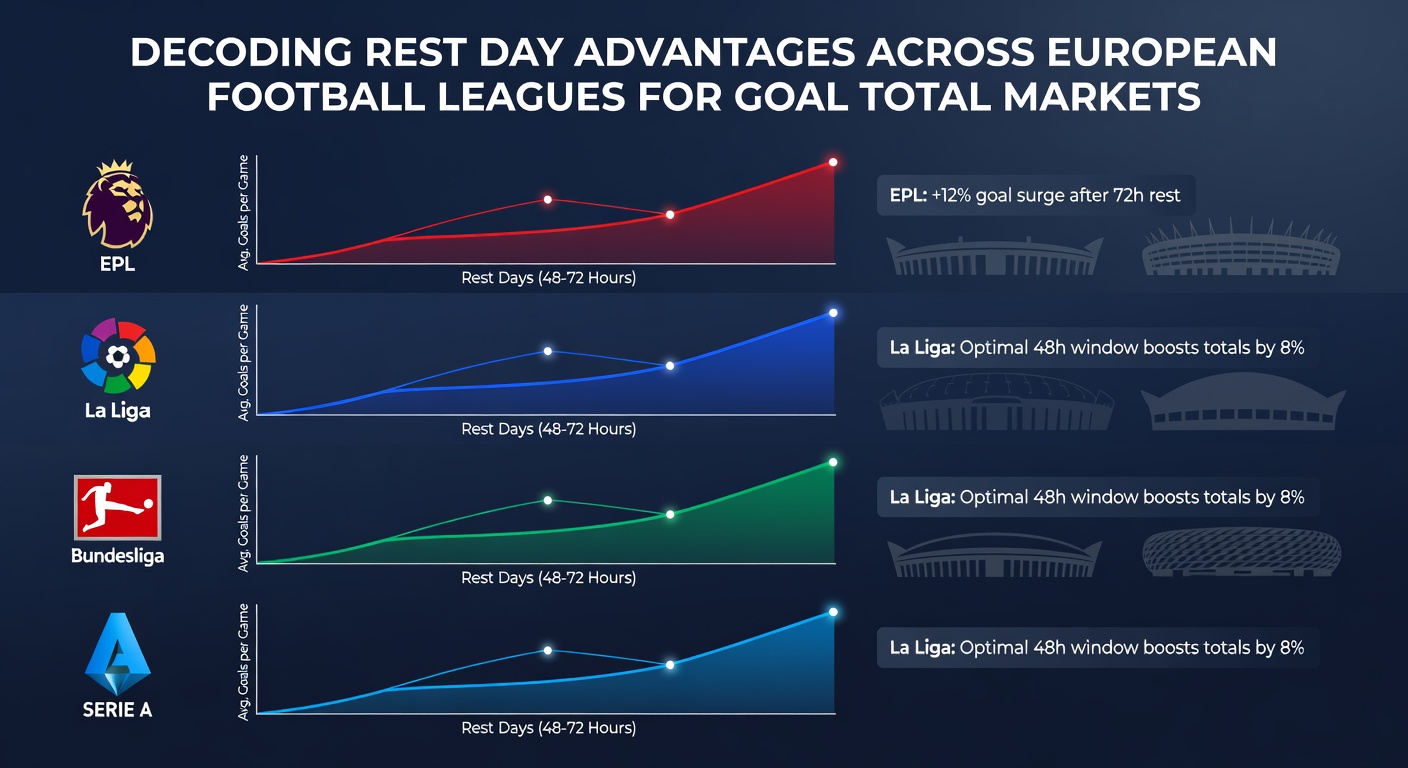
European football schedules create varying windows for player recovery, and analysts track how these intervals influence goal production in matches across the continent's top divisions. Data from the 2025-2026 campaign reveals patterns where teams with three or more rest days between fixtures generate higher average goal outputs in several leagues, while compressed schedules correlate with tighter scorelines in others.
Premier League Recovery Patterns and Totals
English top-flight clubs often navigate dense fixture lists that limit recovery time, yet matches following international breaks or midweek cup exits show distinct shifts. Research indicates sides returning after at least four rest days average 2.8 goals per game, compared with 2.4 in shorter-turnaround fixtures. This holds across both attacking adn defensive units, as fresher legs contribute to sustained pressure and fewer errors in transition.
Observers note these effects appear most pronounced in December and January, when weather and travel compound fatigue. League-wide figures compiled through the season's midpoint demonstrate that over-2.5 goal markets hit at elevated rates when the home side enters with extra preparation time, while under-2.5 outcomes rise when both teams operate on minimal rest.
Bundesliga and High-Tempo Rest Dynamics
German Bundesliga matches feature fast-paced styles that reward recovered squads, and statistical reviews confirm elevated goal volumes when teams enjoy extended breaks. Teams averaging three-plus rest days post-Christmas fixtures produced 3.1 goals per match on average during the 2025-26 winter stretch, whereas two-day turnarounds yielded closer to 2.5. The league's emphasis on high pressing amplifies these differences because recovered players maintain intensity longer into the second half.
La Liga and Serie A Recovery Contrasts
Spanish and Italian leagues present different recovery profiles due to tactical emphases on possession and defensive structure. In La Liga, clubs with additional rest days show modest increases in total goals, often driven by improved chance conversion rather than open play volume. Serie A data through spring 2026 reveals that extended recovery periods reduce low-scoring draws, pushing totals upward by roughly 0.3 goals per match when one side benefits from a longer break.
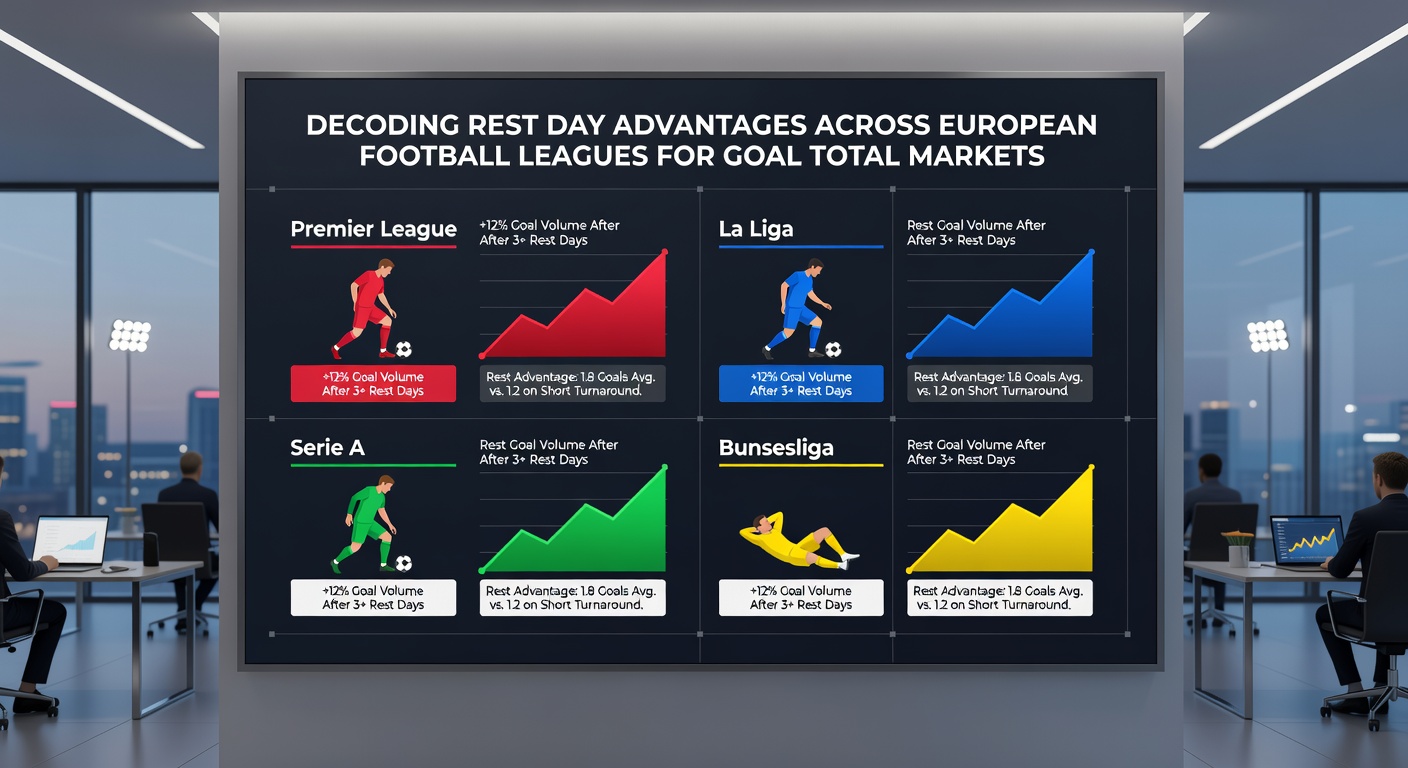
These league-specific tendencies become clearer when examined against broader European competition schedules. UEFA club competitions insert additional variables because teams balancing domestic and continental fixtures frequently face shorter rest windows. Figures reveal that squads returning from European ties with only two recovery days post-match produce fewer goals on average in the subsequent domestic league outing, while those granted four days trend toward higher-scoring encounters.
Ligue 1 and Emerging Recovery Trends
French top-division records from the current season highlight similar but less pronounced effects. Analysts tracking Ligue 1 note that goal totals climb when mid-table sides receive extra rest ahead of fixtures against stronger opponents, yet the margin stays narrower than in Germany or England. Data sets covering the full 2025-26 campaign indicate over-2.5 markets activate in 48 percent of matches featuring at least one rested team, rising to 53 percent when both sides enter with comparable recovery advantages.
June 2026 marks the close of another domestic season and the start of pre-tournament preparation cycles. National associations schedule friendlies and training camps that reset rest-day baselines ahead of the following campaign, and early indicators suggest carry-over effects into the 2026-27 fixtures lists. Teams entering the new term after extended summer breaks often post elevated goal rates in opening weeks, consistent with patterns observed after shorter domestic pauses.
Tracking Goal Markets Through Rest Data
Betting markets focused on goal totals incorporate rest-day metrics through various models that weigh fixture congestion, travel distance, and injury returns. European club associations publish aggregated fixture data that researchers cross-reference with performance statistics to refine these projections. One such analysis from the European Club Association shows correlations between recovery windows and second-half goal production across multiple seasons, particularly in leagues with winter breaks of varying lengths.
Additional context emerges when examining youth and reserve integrations. Clubs that rotate squads after extended rests maintain goal outputs more effectively than those forced into consecutive short-turnaround games. This pattern appears across age groups and supports broader observations about physical recovery influencing attacking output.
Conclusion
Rest-day distribution across Europe's major leagues shapes goal total markets through measurable shifts in match dynamics. Data compiled from the Premier League, Bundesliga, La Liga, Serie A, and Ligue 1 demonstrates consistent directional impacts when recovery intervals lengthen or shorten. Observers continue monitoring these variables as schedules evolve into future seasons, using historical figures to inform projections for goal-oriented betting approaches.