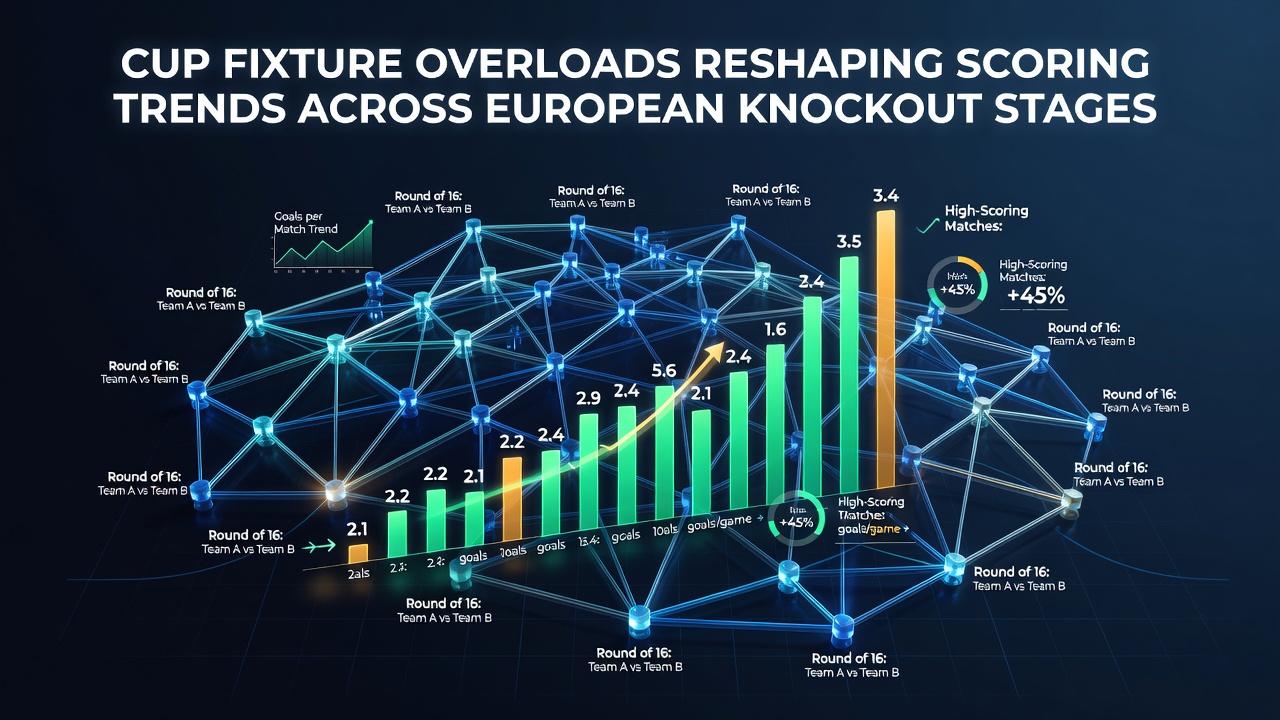
Cup Fixture Overloads Reshaping Scoring Trends Across European Knockout Stages
Fixture congestion in European cup competitions has altered scoring patterns in knockout stages over recent seasons, with data from multiple leagues showing shifts in goal tallies and match dynamics. Teams navigate expanded calendars that include domestic cups, continental ties and international breaks, which compress recovery periods and influence how matches unfold from the round of 16 onward.
Fixture Density and Its Measurable Effects
European governing bodies have tracked an increase in matches per team since the mid-2010s, and figures released by the European Club Association indicate that top clubs now average more than 50 competitive games in a single campaign. This density leaves limited windows for rest, which in turn affects high-intensity actions such as pressing and transitional play that often decide knockout outcomes. Observers note that matches played within 72 hours of a previous fixture record fewer shots on target and a modest rise in set-piece goals compared with games after longer breaks.
August 2026 marks the start of another packed schedule where the new Champions League format and domestic cup replays overlap for several clubs, creating early-season clusters that mirror the congestion seen later in knockout phases. Researchers at sports science departments across Europe have documented corresponding changes in player workload metrics, including elevated fatigue markers that correlate with reduced sprint distances in the final 30 minutes of cup ties.
Shifts in Goal Scoring Across Major Competitions
Statistical reviews of UEFA knockout matches from 2020 to 2025 reveal a gradual movement toward lower average goals per game in later rounds, yet an uptick in matches decided by single goals or penalties. Data compiled through official competition reports show that extra-time periods now produce more decisive moments, with set-piece conversion rates climbing as teams conserve energy for structured attacks rather than open play. Those who study these trends point to examples from the Europa League where sides facing three fixtures in ten days concede fewer counter-attack goals but struggle to break down compact defenses.
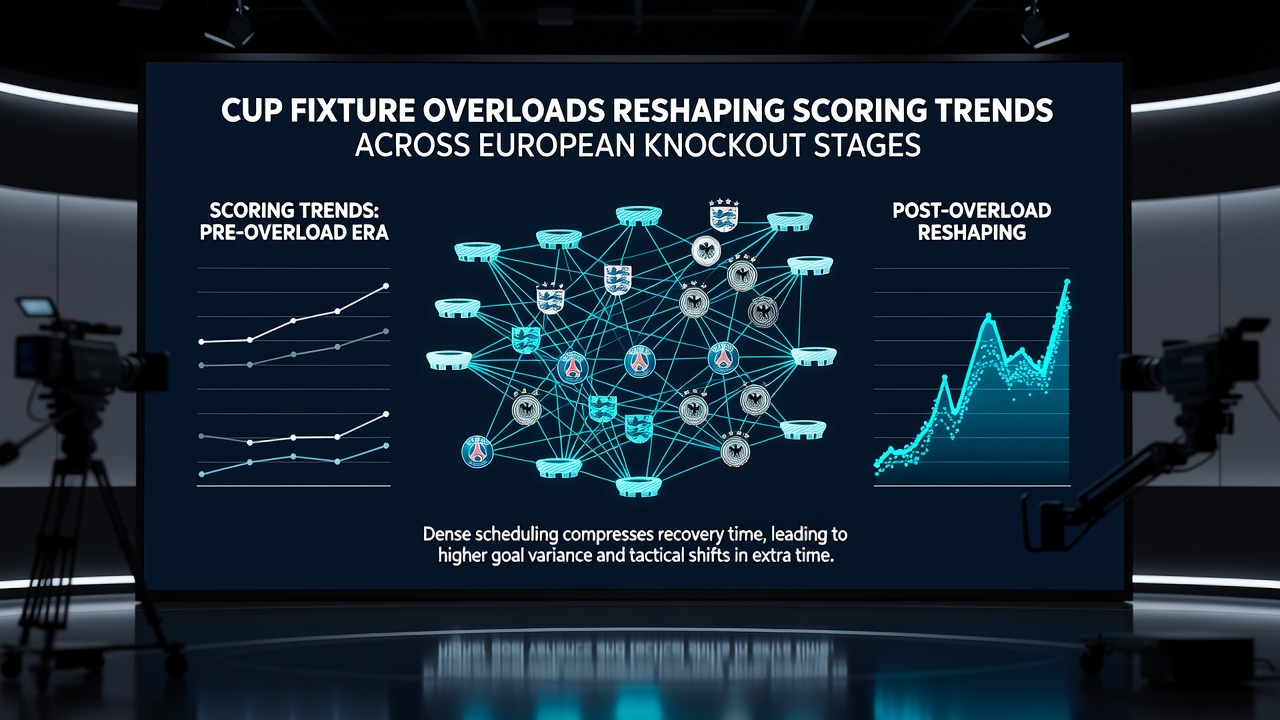
Domestic cup paths add another layer because lower-league opponents force different tactical adjustments, and fatigue from prior league fixtures can blunt the advantage usually held by elite squads. Historical datasets from the Bundesliga, La Liga and Serie A indicate that teams advancing deep into both domestic and European cups experience a measurable dip in expected goals created during subsequent knockout legs, while defensive solidity sometimes improves as players adopt more conservative positioning.
Regional Variations and Tactical Adaptations
Clubs from leagues with winter breaks encounter different overload patterns than those in continuous schedules, which produces distinct scoring profiles in cross-border ties. Analysts examining matches between Premier League and Serie A sides have found higher incidence of draws extending to extra time when both teams arrive with compressed schedules. Meanwhile, Portuguese and Dutch clubs, often required to balance domestic dominance with European runs, display pronounced drops in second-half goal output during quarter-final and semi-final stages according to league archives.
Coaching staffs have responded by rotating personnel earlier and adjusting pressing triggers to conserve energy, moves that indirectly shape the flow of scoring opportunities. One study from a French sports research institute linked these rotations to a small but consistent rise in goals from wide areas, as full-backs receive more license to advance when central midfielders are managed for workload.
Longer-Term Patterns Emerging in 2026
With the 2026 calendar already showing clustered dates around the expanded Club World Cup qualifiers and national team windows, early indicators suggest the same scoring adjustments observed in prior cycles may repeat. Competition organizers have published preliminary schedules that highlight potential overlaps between August domestic cups and continental qualifiers, prompting some federations to trial expanded substitute rules in selected ties. These adjustments aim to mitigate physical strain while maintaining competitive balance, and initial feedback from medical staff indicates modest improvements in recovery markers during congested periods.
Conclusion
European knockout stages continue to reflect the cumulative pressure of fixture overloads through altered goal distributions, increased set-piece reliance and tactical shifts toward energy conservation. Data from governing bodies and academic sources demonstrate that these patterns persist across competitions and seasons, influencing how teams prepare for and execute in high-stakes elimination matches. As calendars evolve into 2026 and beyond, further monitoring of workload metrics and scoring statistics will clarify whether current trends stabilize or give way to new dynamics.