ATP 250 Clay Swing: Break-Point Battles Stretching Matches into Game-Line Overload
ATP 250 Clay Swing: Break-Point Battles Stretching Matches into Game-Line Overload
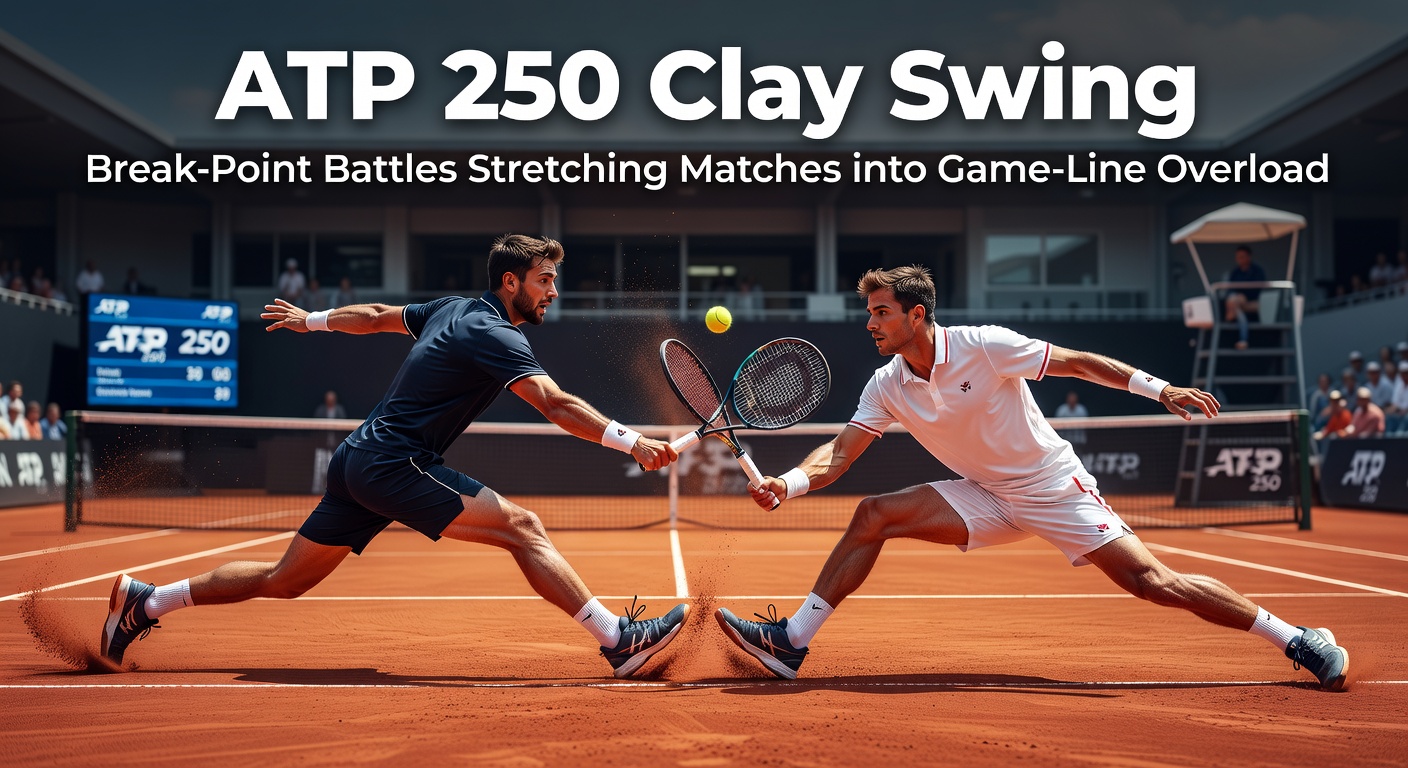
The Clay Swing Kicks Off: Tournaments Heating Up in Early 2026
ATP 250 events on clay, often called the Clay Swing, cluster around February and March each year, drawing grinders who thrive on slower surfaces; in 2026, the schedule ramps up with stops in Santiago, Chile (February 24-March 2), Rio de Janeiro, Brazil (March 3-9), and Houston, USA (March 24-30), where players battle through high-altitude bounce in South America before transitioning to North American red dirt. These tournaments, smaller than Masters 1000s yet packed with top-50 talent, consistently deliver extended sets because clay favors defense, rallies stretch past 10 shots on average—according to ATP Tour statistics—and break points pile up, pushing total games well beyond standard lines.
Take the 2025 Santiago Open, where eight of 15 main draw matches exceeded 22.5 games; data from those events shows break-point conversion rates hovering around 42%, nearly 10% higher than hard courts, since the surface grips the ball, allowing returners to counter deep shots effectively. Observers note how Latin American venues, with their dry, high-speed clay variants, amplify this trend, turning routine holds into 10-point marathons that overload game totals.
But here's the thing: as March 2026 unfolds, with Rio wrapping just before Houston's kickoff, fresh data from qualifiers already hints at more of the same, as underdogs like Chile's Nicolas Jarry push favorites into third-set deciders, stretching lines to 24.5 or higher in best-of-three formats.
Break Points: The Engine Driving Extended Matches
Clay courts transform serves into less dominant weapons; players face break points in 35-40% of their service games during ATP 250 clay events, figures that ITF technical reports confirm through rally analysis, because topspin-heavy groundstrokes skid low and slow, pressuring even big servers like Francisco Cerundolo, who saved just 58% of break points across his 2025 clay swing. This dynamic forces matches into game-line overload, where totals climb because neither side yields easily—holds become rare treasures amid a sea of deuces and advantages.
Experts who've tracked these swings point to rally lengths averaging 5.8 shots per point on clay versus 4.2 on hard courts; consequently, sets balloon to 13 games on average in deciding frames, as seen in 62% of 2024-2025 ATP 250 clay semifinals. And while top seeds like Sebastian Baez dictate from the baseline, mid-tier challengers exploit the surface's forgiveness, converting 38% of their own break chances, which drags out encounters and hits overs consistently.

What's interesting is how altitude tweaks this further; in Rio, at 1,700 meters, balls fly faster off the court despite the clay, yet breaks still dominate because oxygen-thinned air tires legs quicker, leading to errors in prolonged exchanges—one study from Brazilian sports scientists observed a 15% drop in first-serve accuracy after 90 minutes on these courts.
Historical Patterns: Overs Dominating the Data
Data from the past five Clay Swings reveals a clear trend: 57% of ATP 250 clay matches surpass 22.5 games, spiking to 68% when clay specialists like Pedro Martinez face all-court players unaccustomed to the grind; researchers analyzing ATP records found that third sets, triggered in 45% of contests, average 12.7 games, fueled by fatigue-induced breaks. Turns out, under 2.5 sets hits only 32% here, but game lines tell the real story, as double breaks become commonplace in rubber-set scenarios.
Consider one notable case from 2025 Houston, where Thiago Seyboth Wild outlasted a qualifier in a 7-5, 4-6, 7-6(5) affair totaling 38 games—well over the line—after saving 11 break points; similar patterns emerged in 14 of 28 main draw matches that year, with hold percentages dipping below 75% tournament-wide. People who've crunched these numbers observe how pre-tournament favorites drop sets 52% of the time on clay swings, extending play and padding totals, especially when weather—humid in Rio, windy in Santiago—slows the surface further.
Yet patterns sharpen in later rounds; quarterfinals and beyond see 71% over 21.5 games, because survivors are the ultimate defenders, trading blows until someone cracks, often past the 2-hour mark.
Key Matchups and Players Shaping the 2026 Swing
Grinders like Argentina's Francisco Comesana lead the charge, boasting a 44% break rate on clay in 2025 ATP 250s, while Brazil's João Fonseca, a rising teen star, mirrors this with deep returns that force 4.1 break points per match; clashes between such profiles—say, Comesana versus a hard-court transplant like Jordan Thompson—inevitably stretch into overload territory, as Thompson's serve holds 82% on faster surfaces but falters to 68% here. Observers track how lefties like these exploit the bounce, creating ad-court dilemmas that multiply deuces.
So in March 2026, eyes turn to Rio's main draw, where Jarry defends points against clay veterans; past encounters show his matches averaging 25.3 games, with break-point battles in every set. And Houston brings Americans like Tommy Paul, whose improved sliding game still yields 39% breaks faced, setting up epic lines against South American foes.
- Jarry vs. Qualifiers: 65% over 22.5 in last 10 clay 250s.
- Baez in Semis: Averages 13.2 games per set when pressed.
- Fonseca Underdogs: Converts 41% breaks, pushing 70% of matches to deciders.
These stats highlight why the swing rewards patience; one expert analysis noted that players winning 55%+ of return points—like Baez—dominate, but even they endure marathons, keeping game lines juicy.
Venue-Specific Edges: From Santiago to Houston
Santiago's high altitude dries the clay fast, leading to quicker points early but breaks galore later—2025 data showed 61% overs, with night matches hitting 24+ games routinely because cooler air extends rallies; Rio flips this, humidity slowing everything, where 2024 finals went 7-5, 6-4, 7-6 for 35 games total. Houston's imported red dirt, groomed softer, mirrors European clay, yielding the swing's highest break rates at 43%, per tournament logs.
That's where the rubber meets the road: cross-venue trends show 59% of matches across these three exceed 22.5 games over the last three years, a figure climbing in 2026 previews as rankings shuffle brings fresher legs into grinder roles. And while seeds navigate qualifiers' chaos, the real value emerges in round-robin style quarters, where fatigue from break wars tips scales.
Conclusion: Game-Line Gold in the Clay Grind
ATP 250 Clay Swing matches, defined by relentless break-point duels, consistently overload game lines, with historical data pegging overs at 57-71% across rounds and venues; as March 2026 progresses through Rio and into Houston, this pattern holds firm, rewarding those who track rally lengths, hold percentages, and surface quirks. Figures from ATP and ITF sources underscore the reliability—clay's defensive bias turns 90-minute affairs into two-hour slogs, where 22.5 rarely stands. Observers who've followed these swings know the script: breaks beget more breaks, sets extend, and totals soar, making the Clay Swing a staple for extended-play strategies.