Altitude Effects on Scoring Trends in South American Football Leagues
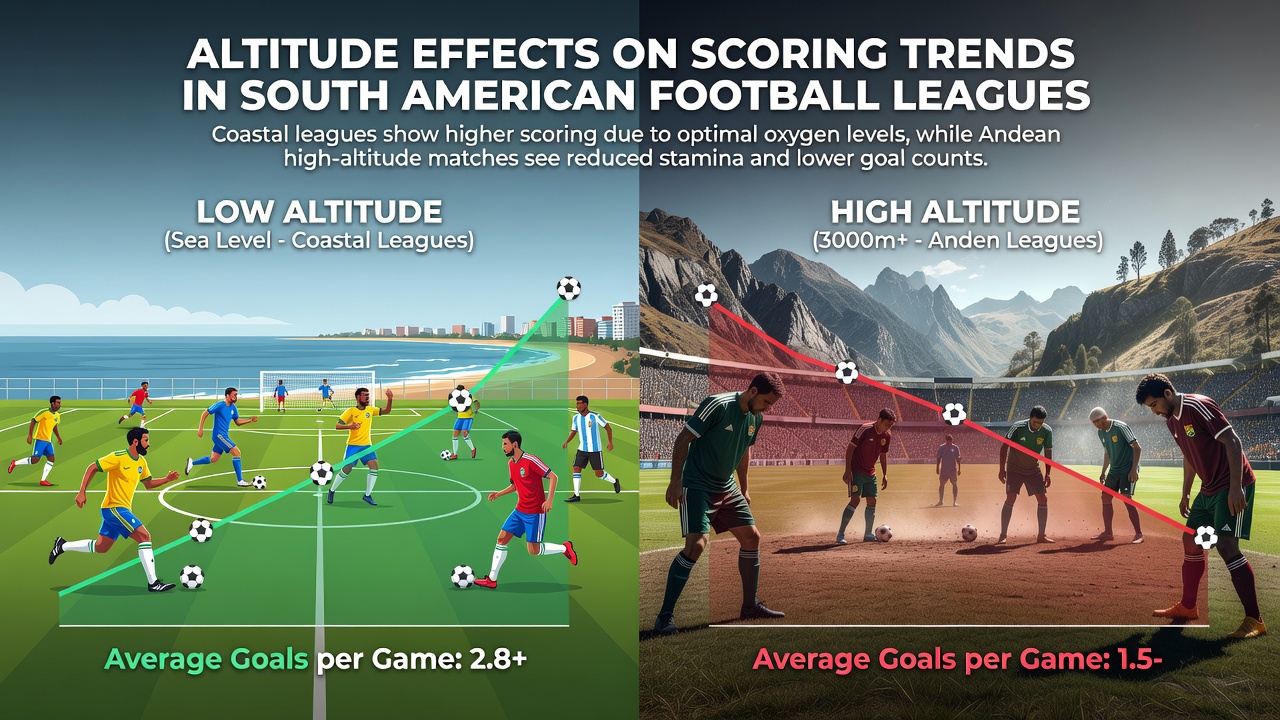
High-altitude venues across South America create distinct patterns in match outcomes and goal tallies, particularly in leagues from Bolivia, Ecuador, Peru, and Colombia. Teams that train and play regularly at elevations above 2,500 meters often record different scoring rates compared to those based at sea level, and these differences show up consistently in league statistics over multiple seasons.
Geographic Context of Major Venues
Estadio Hernando Siles in La Paz sits at approximately 3,600 meters, while Quito's Estadio Olímpico Atahualpa reaches 2,800 meters and several Peruvian stadiums exceed 2,500 meters. These locations force visiting squads to contend with reduced oxygen availability that affects aerobic capacity and recovery between high-intensity efforts. Home sides in these cities accumulate points at higher rates, yet the actual number of goals per match varies depending on how each team adapts during the opening thirty minutes when physiological stress peaks.
Physiological Responses and Match Dynamics
Players experience decreased blood oxygen saturation at these heights, which leads to earlier onset of fatigue and shorter periods of sustained pressing. Data collected from CONMEBOL competitions indicate that matches in La Paz average fewer total goals than fixtures played below 1,000 meters, largely because both teams reduce risk-taking in possession and limit transitions into the final third. Ball flight characteristics also change because lower air density allows the sphere to travel farther when struck cleanly, although accuracy on long-range shots declines as players adjust their technique.
Seasonal Scoring Patterns Across Leagues
Analysis of Bolivian Primera División results over the past decade reveals that home teams at the highest venues score an average of 1.8 goals per game while conceding 0.9, producing lower overall match totals than coastal fixtures. Ecuadorian Serie A shows a similar but less pronounced split, with Quito-based clubs posting stronger defensive records during the first half of the season when visiting sides have had fewer opportunities to acclimatize. Peruvian and Colombian top-flight matches at intermediate altitudes display more balanced goal distributions, yet still trend toward fewer open, end-to-end contests than those at lower elevations.
Adaptation Strategies Employed by Clubs
Clubs based permanently at altitude maintain training protocols that emphasize repeated sprint work and recovery breathing exercises, allowing them to maintain higher work rates throughout ninety minutes. Visiting teams often arrive several days early when schedules permit, although fixture congestion during continental tournaments frequently prevents full acclimatization. Researchers at the University of Buenos Aires have documented that squads with at least seventy-two hours of exposure before kickoff show measurable improvements in distance covered and fewer instances of late-match collapse.
Developments Heading Into June 2026
League calendars in 2026 include additional midweek rounds to accommodate national team commitments ahead of the FIFA World Cup, and several high-altitude clubs have scheduled extra friendly matches at elevation to prepare players for the compressed schedule. These adjustments coincide with ongoing monitoring by medical staff who track hydration and oxygen saturation levels more closely during the cooler winter months when air density drops further.
Comparative Data From Regional Studies
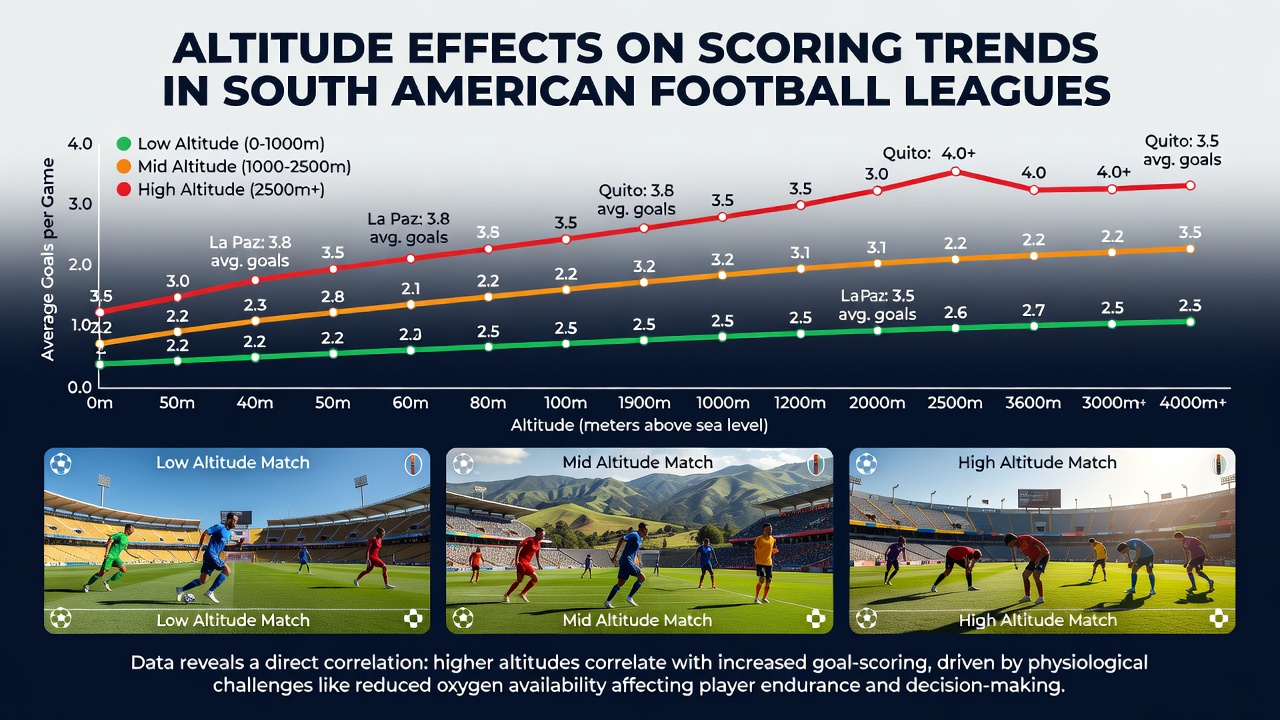
Figures compiled by South American sports science institutes show that goal tallies in matches above 2,500 meters remain stable year to year when both participants share similar altitude experience, whereas mismatches between sea-level and highland sides produce the widest variance in scoring. The same datasets highlight that set-piece goals increase slightly at altitude because defensive organization can break down faster under fatigue, although open-play combinations suffer from reduced passing tempo.
Conclusion
Altitude continues to shape scoring distributions in South American domestic competitions through its effects on player physiology and tactical choices. Consistent patterns emerge when results are grouped by venue elevation, and these patterns persist across multiple seasons regardless of changes in playing personnel. Continued collection of performance metrics will allow clubs and analysts to refine preparation methods as the 2026 calendar unfolds.